
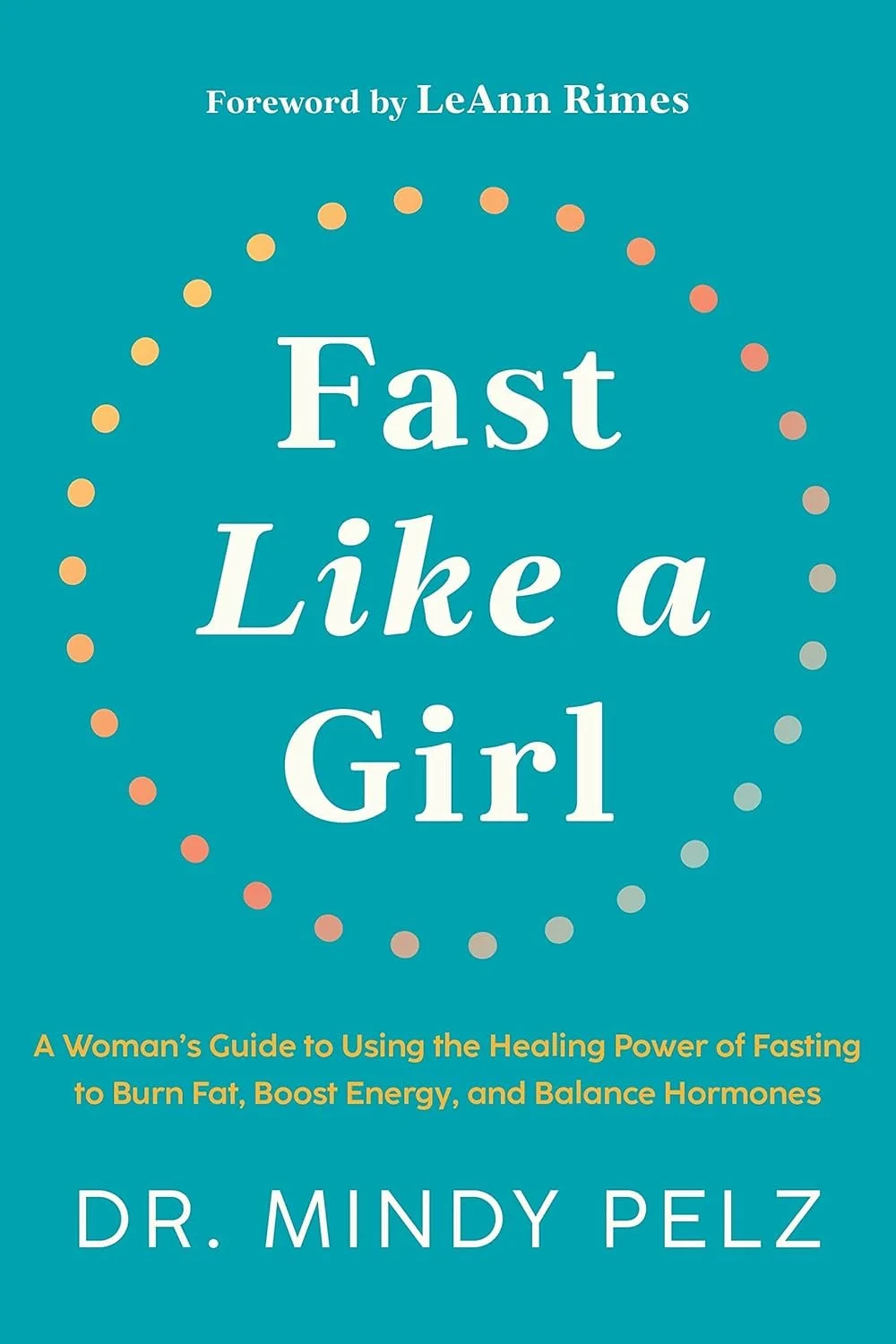
Fast Like a Girl by Dr. Mindy Pelz: The Ultimate Shortcut Guide & Book Review for Women Who Want Hormone-Aligned Fasting
Women are not small men — and our hormones are not built for the same 24-hour fasting rhythms most diet books recommend.
That’s the central truth behind Dr. Mindy Pelz’s Fast Like a Girl, a book that exploded in popularity for offering a fasting method designed specifically for women’s hormonal rhythms.
Rather than forcing the body into rigid fasting windows, Pelz teaches a flexible, cycle-aware approach that respects the infradian rhythm — the 28-ish day hormone cycle that influences metabolism, appetite, mood, inflammation, energy, and stress tolerance.
If you’ve ever tried fasting and found yourself:
irritable
exhausted
unable to sleep
craving everything
or feeling “off” in your luteal phase
—this book explains why.
And more importantly, it outlines how to fast in a way that supports, rather than disrupts, your hormones.
Below is a detailed review of the book and a shortcut guide you can use today to implement the core framework.
Book Review: What Fast Like a Girl Gets Right
1. Women need a different metabolic strategy than men
Unlike men, women operate on a roughly 28-day infradian rhythm called the infradian cycle that affect hormonal fluctuations and changes such as:
insulin sensitivity
stress tolerance
metabolism
fat-burning efficiency
appetite
energy distribution
This is one of the book’s biggest strengths: it reframes fasting as a tool that must shift across the cycle, not stay static because women's hormones respond differently to caloric restriction at each phase.
2. It introduces metabolic flexibility as the ultimate goal
The aim isn’t extreme fasting.
It’s teaching the body to switch efficiently between glucose and fat as fuel — without overwhelming the nervous system.
For many women, especially those with PCOS or insulin resistance, this can be transformative.
Fasting becomes a tool for hormone literacy, not punishment
Rather than forcing long fasts every day, Pelz encourages women to:
fast more in the estrogen-dominant phases
rest, re-feed, and nourish during the progesterone-dominant luteal phase
This aligns with physiology: progesterone cannot be made without adequate calories and carbs, and cortisol spikes from over-fasting can suppress hormone balance.
3. It offers a structured, simple framework
Pelz breaks the cycle into clear metabolic phases and gives:
fasting recommendations
eating style adjustments
nutrient needs
exercise suggestions
This makes the method accessible for beginners.
The system is simple enough to implement but flexible enough to personalize
The framework is intuitive once you see the rhythm.
4. She brings attention to progesterone
Progesterone is one of the most sensitive hormones — easily disrupted by stress, under-eating, poor sleep, and over-fasting.
Pelz’s approach of no long fasts in the luteal phase aligns with what many women experience intuitively:
You feel hungrier, need more carbs, and are less tolerant of stress.
5. The “break your fast well” guidance is practical
Rather than ending fasts with large, processed meals, she recommends breaking fasts with:
fermented foods
polyphenols
fibers
healthy fats
gentle proteins
This supports digestion, motility, and metabolic health (gut health and blood sugar balance) — a major missing piece in many fasting books.
6. It gives women permission to stop fasting in the luteal phase
Many women try to push through hunger or fatigue around Days 20–28.
Pelz explains that the luteal phase requires more calories, carbs, and rest — not more discipline.
This reframing alone can dramatically improve:
PMS
sleep
cravings
irritability
cycle length
progesterone production
Where the Book Has Limitations
While the book is empowering, it’s important to note:
Some claims are more clinical/anecdotal than research-backed.
Long extended fasts (48–72 hours) may not be appropriate for many women.
The ketobiotic eating guidelines use generic macros rather than individualized targets.
The suggested 75 g protein/day is low for active women.
Women with irregular cycles, perimenopause, hypothalamic amenorrhea, or on hormonal birth control may require personalized adaptation.
Still — the overall framework is useful, grounded in physiology, and highly adaptable.
The Ultimate Shortcut Guide to Fast Like a Girl
This is the condensed, ready-to-use guide to implementing the system without reading the entire book.
Step 1: Know Your Cycle Phases
Pelz divides the menstrual cycle into three metabolic windows:
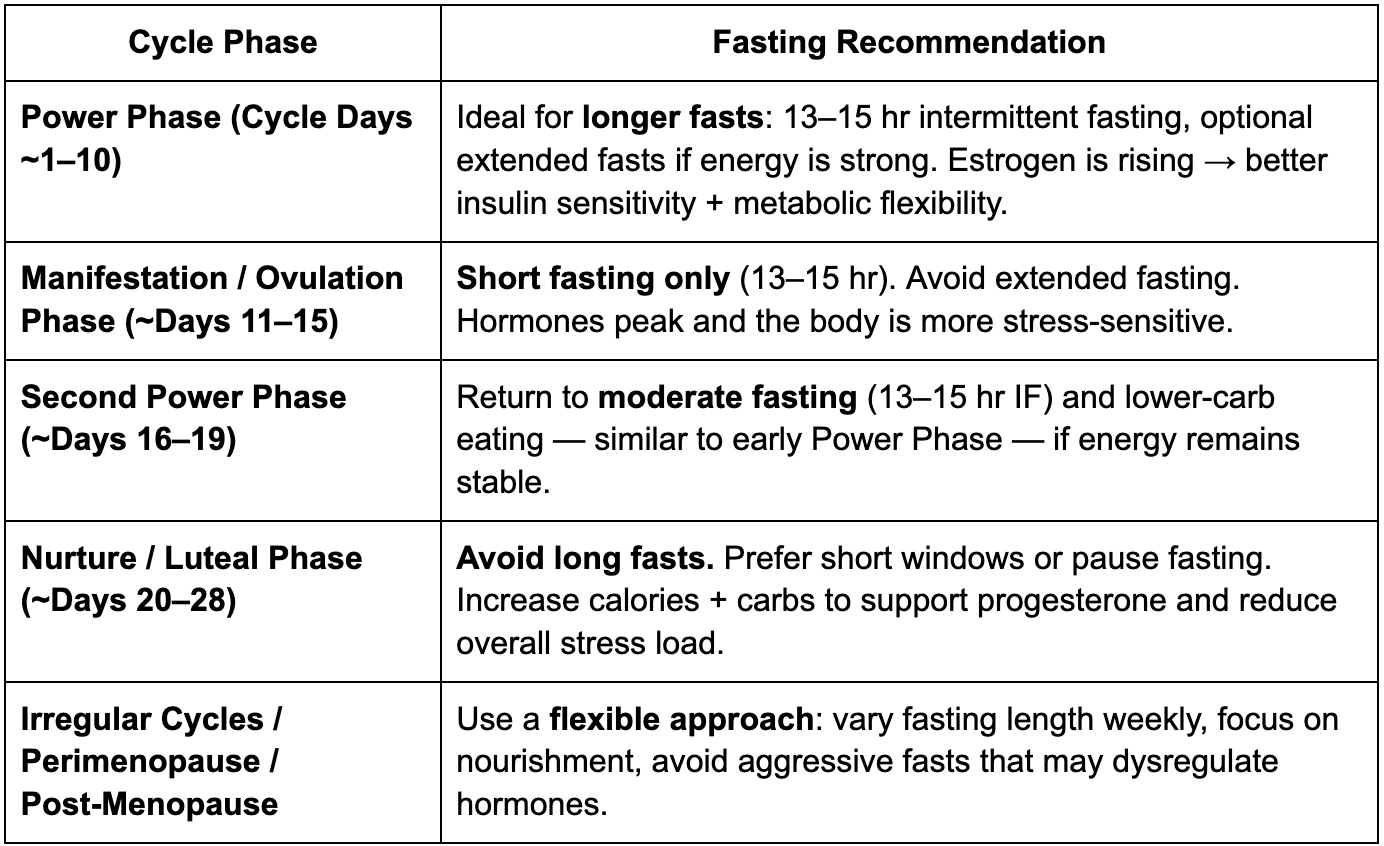
✔ Power Phase
Days 1–10 and 16–19
Estrogen is rising → metabolism is flexible and stress-resilient.
✔ Manifestation Phase
Days 11–15
Ovulation → hormones peak; metabolism is strong, but stress sensitivity increases.
✔ Nurture Phase
Days 20–28
Progesterone rises → the body needs carbs, nourishment, and lower stress.
Cycle-Based Fasting: The Phase Map
Eating Styles in the Book
Ketobiotic Eating (Power Phases)
Works best when fasting tolerance is high.
healthy fats
moderate protein (~75 g/day recommended in book but may be low for active women)
low carbs (<50 g/day)
This supports ketosis, autophagy, and metabolic switching (deeper fat-burning and stable blood sugar)
Hormone-Feasting Eating (Ovulation + Luteal Phase)
Supports fertility, progesterone, thyroid, and cortisol regulation.
higher carbohydrates (up to ~150 g/day)
nutrient-dense meals
minerals, electrolytes, and polyphenols
anti-inflammatory whole foods
This helps avoid the burnout that often accompanies strict fasting all month.
Supporting Practices Pelz Recommends
These enhance benefits and reduce stress:
1. Minerals + Electrolytes
Fasting increases mineral loss → supplement with:
sea salt
mineral water
electrolytes
2. Fat-forward beverages for steady cortisol
✔ Coffee strategy
Avoid black coffee on an empty stomach — pair with fats or switch to herbal beverages.
Pair with:
MCT oil
collagen
a small amount of healthy fat
3. Cycle-aware exercise
Power Phase: HIIT, strength training
Manifestation (ovulation): light strength or moderate movement
Nurture Phase (luteal): walking, yoga, Pilates, rest
4. Tune into biofeedback
Pelz emphasizes adjusting fasting based on:
sleep quality
cravings
mood
stress
hunger
PMS
Adjust fasting accordingly.
No plan should override your body.
Key Takeaways
Women thrive on flexible fasting, not rigid fasting AKA women should not fast the same way daily.
Estrogen phases = fasting-friendly.
The luteal phase is not a good time for restricting food. Luteal phase needs more food, not less.
Progesterone phase = fasting-sensitive.
Progesterone needs calories + carbs, not cortisol spikes.
Extended fasting is only appropriate in specific phases.
Breaking a fast is just as important as fasting itself.
Metabolic flexibility (not restriction) is the ultimate goal.
Cycle-syncing fasting makes fasting sustainable.
The book offers a powerful framework, but personalization is essential.
How Fast Like a Girl Helps Women With PCOS & Irregular Periods
Women with PCOS often struggle with:
irregular or absent ovulation
insulin resistance
higher androgens
chronic inflammation
cortisol sensitivity
blood sugar volatility
unpredictable hunger and cravings
difficulty losing weight
Fast Like a Girl can be helpful for many women with PCOS because the book focuses on metabolic flexibility, insulin balance, hormone-aware eating, and reducing stress on the body — all core issues in PCOS.
Below is how the book offers support and what modifications are needed for irregular cycles.
1. Fasting can help improve insulin sensitivity — a major root cause of PCOS
About 70–80% of women with PCOS have some degree of insulin resistance.
Pelz’s fasting approach — especially 13–15 hour intermittent fasts — can:
improve glucose control
lower fasting insulin
reduce cravings
support fat-burning
stabilize energy
This alone can help regulate cycles over time by lowering androgen dominance and improving ovulation frequency.
However:
Women with PCOS should avoid extreme fasts (48–72 hours) unless medically supervised, as they can trigger stress responses or worsen binge–restrict cycles.
2. The cycle-syncing model teaches women how to adapt fasting intensity across the month
Even if someone with PCOS has irregular or unpredictable cycles, the concept of “fasting in estrogen-dominant phases and nourishing in progesterone phases” is still valuable.
Why?
Because women with PCOS often push themselves to fast aggressively every day — especially out of frustration with symptoms or weight — which can:
worsen cortisol
disrupt ovulation further
stall metabolism
worsen PMS or cravings
Pelz’s method introduces flexibility, not rigidity.
3. The book emphasizes nourishment and carbs in the luteal phase — essential for progesterone
Many women with PCOS under-eat carbohydrates because they have been told carbs “cause PCOS.”
But progesterone cannot be made without:
adequate calories
adequate carbs
adequate minerals
Pelz’s “hormone-feasting” eating style teaches women:
when the body BENEFITS from more carbs
when cutting too many carbs can worsen PMS
how under-eating creates more stress hormones and fewer sex hormones
This is a key missing piece for many women with PCOS.
4. For irregular or absent cycles, the “flexible fasting” chapter is the most helpful
Pelz acknowledges that not all women have predictable cycles.
For women with:
long cycles
anovulatory cycles
post-pill cycles
PCOS with no clear phases
She recommends a weekly rhythm instead of a cycle rhythm:
Example Flexible Approach
2–3 days/week: 13–15 hr fasts
1 day/week: nutrient-dense refeed (more carbs + minerals)
1 day/week: higher-fat, low-carb (ketobiotic)
2 days/week: rest + nourishment
This method helps women:
improve metabolic health
balance glucose
reduce inflammation
without relying on knowing their exact cycle day.
5. The book helps PCOS patients understand stress, cortisol, and fasting tolerance
Women with PCOS often have cortisol dysregulation, meaning long fasts may feel harder or lead to:
anxiety
sleep problems
irritability
binge eating later
Pelz teaches women to adjust fasting intensity based on stress load —
a critical concept often missing from PCOS diets.
6. Cycle syncing can help restore cycles over time
By improving:
insulin
inflammation
stress responses
ovulatory frequency
Many women with PCOS report:
fewer long cycles
a more predictable luteal phase
more ovulatory signs
easier periods
improved PMS symptoms
Fasting alone won’t “fix” PCOS, but combined with balanced nutrition and stress reduction, cycle syncing can help normalize cycles over months.
7. Pelz emphasizes gut health — another overlooked piece in PCOS
Breaking fasts with:
fermented foods
fiber
polyphenols
healthy fats
supports the microbiome, which plays a major role in:
inflammation
androgen levels
insulin sensitivity
mood
digestion
Gut support is one of the strongest foundations for improving PCOS symptoms.
When PCOS Patients Should Be Cautious
Women with PCOS should avoid:
Prolonged fasting (48–72 hours) unless supervised
Daily strict fasting with no refeed days
Low-carb eating every day of the month
Pushing through hunger or fatigue in the luteal phase
Fasting during high stress, poor sleep, or intense exercise periods
PCOS is highly stress-sensitive — and fasting is a stressor.
The right amount helps.
Too much backfires.
Bottom Line: How Is This Book Helpful for PCOS?
Fast Like a Girl is helpful for women with PCOS because it teaches them HOW to fast safely, WHEN to adjust fasting, and WHY nourishment matters as much as fasting.
It supports:
insulin sensitivity
metabolic flexibility
ovulation
stress resilience
hormone balance
better PMS and luteal phase symptoms
For irregular cycles, the flexible weekly model gives women a way to use fasting therapeutically even without predictable cycle days.
Final Book Review Summary
Is Fast Like a Girl Worth Reading?
Absolutely — especially for women whose hormones feel easily disrupted by dieting, fasting, or inconsistent eating patterns.
Fast Like a Girl is not really a “fasting book.”
It’s a hormone literacy book, wrapped inside a fasting method.
Its biggest contribution is helping women realize:
you don’t need to fast the same way every day
your body’s needs shift weekly
fasting can help or harm your hormones depending on timing
the luteal phase should be a time of nourishment, not deprivation
metabolic flexibility is the real goal — not suffering
While some details oversimplify complex hormonal dynamics, the overall framework is one of the most woman-centered, physiology-respecting fasting systems available.
This book is a fantastic introduction for women who want to explore fasting without harming their hormones, fertility, metabolism, or nervous system.
The book:
demystifies women’s metabolic rhythms
empowers women to fast without harming hormones
normalizes nourishment and rest during the luteal phase
integrates gut health, minerals, and nervous system regulation
provides a clear, structured fasting roadmap
It’s most useful as a framework, not a rigid rulebook.
With personalization, this approach can be incredibly supportive for:
PCOS
insulin resistance
weight fluctuations
PMS/PMDD
fatigue
burnout
perimenopause transitions
stress-sensitive women
Ready to Try Cycle-Synced Fasting — But With Expert Support?
Fasting can be transformative…
but only when it’s tailored to YOUR real-life cycle, metabolism, symptoms, and stress load.
If you want:
more energy
fewer cravings
better metabolism
hormonal balance
smoother cycles
or clear guidance on fasting for PCOS, thyroid issues, fatigue, or insulin resistance
I can help you implement a personalized, safe, hormone-supportive fasting plan that works with your physiology — not against it.
