
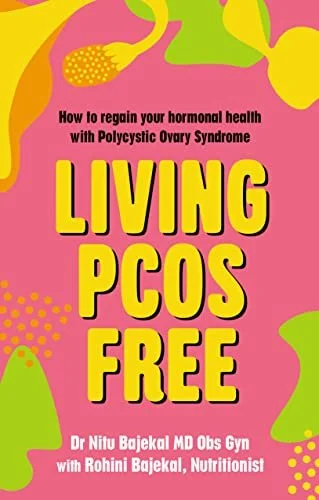
Living PCOS Free By Dr. Nitu & Rohini Bajekal — A Detailed Book Review & Shortcut Guide
A Deep-Dive Review & Practical Shortcut Guide (So You Don’t Have To Read The Whole Book)
If you’ve ever wished for one resource that explains what PCOS actually is, why it happens, and what you can realistically do about it—without fad diets, fear, or quick-fix promises—Living PCOS Free is that book.
Written by Dr. Nitu Bajekal, a gynecologist with over 35 years of clinical experience, and her daughter Rohini Bajekal, a nutritionist, it blends conventional medicine with lifestyle medicine and nutrition in a way that is both deeply evidence-based and actually doable.
This blog is your shortcut guide to the entire book.
You’ll get:
What the book is about
The structure and key content
The main lifestyle and medical recommendations
The unique frameworks this book introduces
A detailed breakdown of the 21-Day PCOS Reset
…so you can take action without needing to read every page.
What Living PCOS Free Is About
At its core, Living PCOS Free is a guidebook for anyone with Polycystic Ovary Syndrome (PCOS)—or who suspects they might have it—and wants to:
Understand what PCOS actually is (and isn’t)
Learn why PCOS symptoms happen
Use nutrition, movement, sleep, stress management, and medical care together to manage it
The book emphasizes:
Lifestyle medicine as a powerful, evidence-based tool
Whole-food, plant-forward eating
Exercise, sleep, stress, and environment as key levers
Conventional medicine when needed, not rejected
It actively argues against quick fixes, crash diets, and “miracle cures,” and instead champions sustainable, long-term lifestyle shifts.
How The Book Is Structured
The book is divided into four parts:
Part 1 – Understanding PCOS
What PCOS is, how it’s diagnosed, root causes like insulin resistance, inflammation, and hormonal imbalances.Part 2 – Making Informed Health Choices
The “Six Pillars of Lifestyle Medicine” tailored to PCOS: nutrition, physical activity, sleep, stress management, avoiding harmful substances, and social connection.Part 3 – Managing PCOS Symptoms
Symptom-specific chapters: irregular periods, acne, hirsutism, scalp hair loss, fertility, weight, mood and mental health.Part 4 – From Surviving To Thriving
A 21-day lifestyle and nutrition programme with plant-based, oil-free, gluten-free recipes, daily habits, and “PCOS Pointers.”
Throughout, the book weaves in:
Case histories
Myth-busters
“PCOS pointers” (bite-sized summaries)
Practical, done-for-you tips and frameworks
Who The Book Is For
The book is written for:
People with PCOS (or suspected PCOS) who want more than, “Here’s the pill, come back later.”
Anyone interested in nutrition, lifestyle medicine, and hormonal health.
Health professionals who want a clinically grounded yet lifestyle-forward resource.
The tone is accessible enough for non-professionals, but robust enough that clinicians can use it as a reference.
What The Book Emphasizes (And What It Doesn’t Claim)
Emphasizes:
PCOS is multi-factorial – hormones, insulin resistance, inflammation, genetics, lifestyle, and environment all play roles.
Sustainable, evidence-based lifestyle changes (nutrition, movement, stress, sleep) significantly improve symptoms.
Personalization is key. PCOS presents differently for everyone; there is no single correct protocol.
Does Not Claim:
There’s a “one-size-fits-all cure” for PCOS.
That a plant-based lifestyle alone can solve every PCOS case. Medication and other interventions are viewed as valid tools.
Main Recommendations From Living PCOS Free
1. Nutrition Recommendations
Whole-Food, Plant-Forward Eating as Foundation
The book strongly promotes a whole-food, high-fiber, minimally processed, plant-forward diet. That means centering:
Vegetables (lots of variety and color)
Fruits
Whole grains (oats, quinoa, brown rice, barley, millet)
Legumes (beans, lentils, chickpeas)
Nuts & seeds
Healthy fats (avocado, olives, tahini, nuts/seeds)
This way of eating helps:
Improve insulin resistance
Reduce inflammation
Support gut health
Balance hormones
Fiber is a major player. The authors encourage aiming for about 30–40g per day.
✖️ Foods To Minimize (Not Demonize)
The tone is not restrictive, but they do suggest reducing:
Ultra-processed foods
Refined carbs (white flour, pastries, sugary snacks)
Sugary beverages
Excess saturated fat
High-glycemic foods
Red and processed meats
Excess dairy if someone notices it worsens symptoms
Foods To Prioritize For PCOS
These show up over and over in the book:
Ground flaxseed – daily, for fiber, lignans, hormone support
Berries – low glycemic, high antioxidant
Leafy greens – micronutrients + folate + magnesium
Cruciferous vegetables (broccoli, Brussels sprouts, cabbage, kale) – support estrogen metabolism and detox pathways
Cinnamon – may support insulin sensitivity
Legumes – stabilize blood sugar and improve satiety
Plant omega-3s (walnuts, chia, flax, algae-based DHA)
Eating Pattern Recommendations
They recommend:
Regular mealtimes
Balanced plates: fiber + protein + healthy fats
Avoiding extreme fasting patterns as a first-line strategy
Not skipping meals if it worsens cravings or blood sugar swings
A consistent daily rhythm around food
They do not promote keto, very low-carb diets, or intermittent fasting as default PCOS treatment.
2. Lifestyle Recommendations: The Six Pillars Of Lifestyle Medicine
The book is organized around six pillars, customized for PCOS.
Pillar 1: Physical Activity
Exercise is framed as a cornerstone therapy.
Recommendations:
150+ minutes/week of moderate-intensity aerobic activity
2–3 days/week of strength training
More NEAT: walking, standing, general daily movement
Benefits include:
Improved insulin sensitivity
Reduced androgen levels
Better sleep and mood
Support for weight and metabolic health
Pillar 2: Restorative Sleep
Goal: 7–9 hours per night.
Sleep hygiene suggestions:
Regular sleep–wake schedule
Limiting screens before bed
Cool, dark, quiet bedroom
Avoiding caffeine after mid-day
Poor sleep worsens:
Stress and cortisol
Cravings and hunger
Insulin resistance
Inflammatory processes
Pillar 3: Stress Reduction
Chronic stress → elevated cortisol → worsened insulin resistance and PCOS symptoms.
Recommended tools:
Yoga
Meditation
Breathwork (especially long exhale practices)
Mindfulness
Journaling
Time in nature
Boundaries and lifestyle design
Stress management is presented as biological treatment, not just “nice to have.”
Pillar 4: Avoiding Harmful Substances
They advise reducing:
Tobacco
Excess alcohol
Recreational drugs
Environmental endocrine disruptors (BPA, certain plastics, some cosmetics)
The book includes guidance on safer swaps for personal care and household products.
Pillar 5: Healthy Relationships & Social Support
Loneliness and isolation are framed as major health risk factors, on par with smoking.
They highlight:
Community and connection
Support networks
Advocacy for yourself in medical spaces
Mental health support when needed
Pillar 6: Nutrition
This loops back to the nutrition section above—it’s the sixth pillar but also the backbone of the whole approach.
3. Medical Recommendations
The authors are very clear: this is not a “no meds” book. They support integrative care.
Common evidence-based options discussed:
Metformin – for insulin resistance
Oral contraceptive pills (OCPs) – for regulating cycles and managing androgens
Spironolactone – for hirsutism and acne
Letrozole or Clomid – for fertility support
Inositols (Myo-inositol + D-chiro combinations) – for ovulation, insulin, mood
Vitamin D – often low in PCOS; supplementation when deficient
Vitamin B12 – especially important for those on metformin or plant-based diets
The overarching message: Personalized care, not one-size-fits-all.
4. Symptom-Specific Strategies
The book has whole chapters on individual symptoms. Here’s a condensed version.
Irregular Periods / Anovulation
Focus on:
Improving insulin sensitivity
Increasing fiber and whole grains
Reducing inflammation
Adequate omega-3s
Strength training
Inositols
Vitamin D
Considering OCPs if appropriate
Acne & Hirsutism
Core strategies:
Reducing high-glycemic foods
Considering dairy reduction if there’s a clear pattern
Prioritizing omega-3s
Drinking spearmint tea (about 2 cups per day) for its anti-androgenic effects
Choosing zinc-rich plant foods
Managing stress
Medical options like OCPs and spironolactone
Weight & Metabolism
They emphasize: You don’t have to lose weight to improve health or symptoms.
Focus on:
Health behaviors, not dieting
High-fiber, high-volume meals
Stable blood sugar
Movement throughout the day
Avoiding crash diets and extreme restriction
Weight loss, if it happens, is framed as a possible side effect of metabolic healing, not the main goal.
Mood & Energy
Targeted through:
Balanced blood sugar
Regular meals (no extreme restriction)
Omega-3s
Stress management
Exercise
Quality sleep and circadian rhythm
Social connection and support
Detailed Structure: What’s In Each Part Of The Book
PART I — Understanding PCOS (Deep Dive)
What PCOS Is (And Isn’t)
The book makes several key clarifications:
PCOS is a lifelong metabolic + hormonal condition, not just a reproductive disorder.
It’s not caused by ovarian “cysts” (those are actually follicles on ultrasound).
It’s driven by insulin resistance, inflammation, hormonal dysregulation, and genetic/epigenetic factors.
It’s a spectrum—no two people look exactly alike.
Root Causes Explained
Insulin Resistance
Decreases ovarian sensitivity and increases androgen production.
Drives weight gain, which can further worsen insulin resistance.
Leads to irregular cycles, acne, hirsutism.
Occurs in both higher-weight and lean individuals.
Hormonal Imbalances
PCOS often features:↑ LH
↑ Androgens (testosterone, DHT)
↓ SHBG
↑ AMH
Disrupted estrogen–progesterone rhythm
Irregular ovulation
The book explains how androgen excess affects hair growth, hair loss, acne, mood, and metabolism.
Chronic Low-Grade Inflammation
Driven by:High-sugar, ultra-processed diets
Gut dysbiosis
Sleep deprivation
Chronic stress
Environmental toxins
Inflammation worsens both insulin resistance and ovarian function.
Genetics & Epigenetics
Family traits matter, but lifestyle can modify expression. Things like in utero exposures, environmental toxins, chronic stress, and sleep shape how PCOS shows up.
Diagnostic Confusion
The authors carefully explain:
The Rotterdam criteria
NIH criteria
AE-PCOS criteria
They also stress caution diagnosing teenagers, given normal pubertal changes can resemble PCOS.
PART II — Lifestyle Medicine (Six Pillars)
We covered the six pillars above, but the book goes deeper into:
Fiber as “PCOS medicine” – binding excess estrogen, feeding gut bacteria, improving insulin sensitivity, increasing satiety.
Phytonutrients from leafy greens, berries, soy, whole grains, turmeric, and legumes.
Glycemic control – pairing carbs with fat, fiber, and protein; choosing slow-digesting carbs.
Soy – debunking myths and highlighting its benefits for cholesterol, inflammation, and fertility.
PART III — Managing PCOS Symptoms
We already summarized the symptom strategies, but the book also includes:
Scalp hair loss (androgenic alopecia):
DHT’s effects on hair follicles
Nutrient deficiency workups (iron, B12, zinc)
Anti-inflammatory nutrition
Protein adequacy
Minoxidil and other medical options
Fertility:
How and why PCOS affects ovulation
Letrozole as a first-line fertility medication
Role of nutrition and metabolic health in enhancing fertility
The potential benefits of soy
Considering partner’s health as well
Mental Health & Mood:
Higher rates of anxiety, depression, eating disorders, and body-image distress in PCOS
Emphasis on compassionate care, gentle nutrition, and integrating mental health support where needed.
PART IV — The 21-Day PCOS Reset
This is a practical, structured guide to implementing the book’s principles.
It includes:
Weekly themes
Daily habits to track
Simple, plant-based recipes
Checklists and reflection prompts
The recipes are:
Plant-based
Oil-free
Gluten-free
High in fiber
Culturally diverse
Designed for beginners
Think: bowls, curries, soups, smoothies, oats, salads.
Unique Concepts & Frameworks Introduced In The Book
This is where Living PCOS Free really shines.
1. The PCOS Root-Cause Model
PCOS is reframed as a metabolic–inflammatory–hormonal condition with four main roots:
Insulin resistance
Chronic inflammation
Hormonal dysregulation
Genetic/epigenetic influences
This model helps readers understand why lifestyle changes matter so much.
2. The PCOS Pyramids
The PCOS Lifestyle Pyramid teaches prioritization:
Base (foundations):
High-fiber whole foods, movement, sleep, stress reduction, social connection.Middle (targeted support):
Supplements (inositol, omega-3s, vitamin D, B12), environmental detox.Top (medical therapies):
Metformin, OCPs, spironolactone, letrozole, etc.
This shows patients where to start and how to build.
3. The “PCOS Toolbox”
The authors encourage creating a personalized toolbox including:
Food-as-medicine strategies
Movement plans
Sleep rituals
Stress practices
Supplements (when indicated)
Medical options
Emotional and social support
Environmental hygiene
It becomes a living, flexible system patients can adjust over time.
4. The Gut–Hormone–Inflammation Triangle
The book deeply connects:
Gut bacteria and estrogen metabolism
Dysbiosis and systemic inflammation
Fiber, SCFAs, and insulin sensitivity
Fermented foods and inflammatory markers
Gut health is positioned as central to PCOS management.
5. Myth-Busting
The authors thoroughly debunk:
“PCOS = infertility.”
“Weight loss is required to manage PCOS.”
“You must cut gluten and dairy.”
“Keto cures PCOS.”
“Supplements alone can fix everything.”
Instead, they emphasize root-cause healing and steady habits.
6. Normal vs Optimal Lab Ranges
They explain how PCOS patients often fall into “normal” lab ranges but still feel awful.
They encourage more nuanced interpretation of:
Ferritin
Vitamin D
B12
Thyroid labs
Lipids
Fasting insulin and post-meal glucose
The message: don’t ignore symptoms just because labs are “normal.”
The 21-Day PCOS Reset – A Detailed Short-Cut
The reset is not a diet, cleanse, or detox. It’s a 21-day immersion into the Six Pillars.
It includes:
Daily education
Habit tracking
Simple recipes
Mindset reframes
Reflection prompts
Week 1 — Blood Sugar & Insulin Reset
Goal: Stabilize blood sugar, reduce cravings, lower insulin spikes.
Daily focuses:
Three balanced meals per day
1–2 servings of legumes daily
1 tablespoon ground flaxseed
10–20 minutes walking after meals
6–8 cups water
Reducing ultra-processed foods (not all carbs)
Building plates with fiber + protein + healthy fats
Education:
What insulin resistance is, why spikes occur, why fiber and regular meals matter.
Example meals:
Overnight oats with chia and berries, lentil dal with brown rice, buddha bowls, tofu stir-fries.
Week 2 — Inflammation & Hormone Support
Goal: Lower chronic inflammation and modulate androgen activity.
Daily focuses:
½ plate vegetables at lunch and dinner
Daily cruciferous vegetables
Turmeric + black pepper
1–2 servings of omega-3-rich foods
Lower saturated fat
Green tea or spearmint tea
High-antioxidant foods (berries, herbs, spices)
Education:
How inflammation affects hormones, how fiber supports estrogen clearance, how antioxidants protect ovarian health, and why UPFs worsen androgen activity.
Example meals:
Broccoli and tofu bowls, chickpea curries, kale salads with tahini, lentil soups, blueberry smoothies.
Week 3 — Gut Health, Sleep & Stress
Goal: Calm the nervous system, support digestion, and improve hormone metabolism.
Daily focuses:
Fermented foods (sauerkraut, yogurt, etc.)
Prebiotic foods (onions, garlic, oats, bananas, beans)
Slow, mindful chewing
10 minutes daily of meditation or gentle breathwork
Bedtime ritual: lights down, screens off
7–9 hours of sleep
Time in nature / light exposure
Reduced caffeine after noon
Gentle movement (yoga, stretching)
Education:
Gut–brain connection, SCFAs and insulin sensitivity, melatonin as a metabolic hormone, how stress worsens androgens, why sleep deprivation increases appetite.
Example meals:
Probiotic yogurt with seeds, lentil vegetable soup, fiber-rich oat bowls, veggie-loaded whole-grain pasta, savory buddha bowls.
Special Components Of The 21-Day Reset
Reflection pages – tracking physical symptoms, mood, sleep, cravings, stress, wins, and triggers.
“PCOS Pointers” – bite-sized mindset reminders like:
“Your body is not working against you.”
“Healing is not linear.”
“Small habits compound.”
“You don’t need perfection, only consistency.”
Recipe frameworks – teaching you how to build meals (grain base + plant protein + veggies + healthy fat + herbs/spices), not just follow recipes.
No calorie counting, macro tracking, or restriction.
Optional supplements mentioned: inositol, omega-3s, vitamin D, B12 (especially if plant-based), magnesium (for sleep and stress).
Expected Outcomes After 21 Days
The authors don’t over-promise. But many people may experience:
Steadier blood sugar
Fewer cravings
Better digestion and bowel movements
Less bloating
Softer PMS
Improved energy
Calmer mood
Better sleep quality
More regular routines around food and movement
Reduced inflammation
Clearer skin
Weight change may or may not happen, but the focus is always on metabolic and hormonal health first.
Big Takeaway Messages From Living PCOS Free
Throughout the book, several themes repeat:
PCOS is manageable. You are not broken.
Small, consistent changes matter more than intense short bursts.
Lifestyle shifts are powerful, but meds are also valid tools.
You don’t need to earn your health by shrinking your body.
Food can be a form of care, not punishment.
Your symptoms have root causes—and you can address them.
Ready To Start Living PCOS Free — With Support?
Reading about PCOS is one thing. Actually implementing these nutrition, lifestyle, and mindset shifts in your real, busy life is another.
If you’re ready to:
Turn this book’s ideas into a personalized plan
Calm cravings, stabilize blood sugar, and support hormones with nourishing meals (not restriction)
Get clear on labs, supplements, and realistic next steps for your PCOS picture
Feel supported instead of trying to “figure it out” alone
…I’d love to support you.
As a holistic, hormone-focused dietitian, I help women with PCOS translate evidence-based strategies—like the ones in Living PCOS Free—into simple, sustainable routines that actually fit their life, preferences, and energy.
🔗 Click here to learn more about working together (1:1 coaching + PCOS support), or book a free discovery call to see if it’s a good fit.
You don’t have to do this alone.
Let’s build your personal PCOS toolbox and create a plan that helps you feel more energized, regulated, and at home in your body—one doable step at a time.
