
The PCOS Plate: A Dietitian’s Guide to Balancing Hormones Naturally
A Practical, No-Drama Meal Framework to Balance Insulin, Calm Androgens, and Support Ovulation
Women with PCOS are often told to “cut carbs,” “eat less,” or “just lose weight.”
None of that addresses the root drivers of PCOS — and for many women, it worsens symptoms by increasing metabolic stress, blood sugar instability, and hormone disruption.
What your body actually needs is steady blood sugar, consistent nourishment, and strategic nutrient pairing.
This Ultimate Guide to The PCOS Plate breaks down how to build meals that support insulin sensitivity, lower inflammation, calm androgen excess, and stabilize energy — without restriction, overwhelm, or food fear. (These same mechanisms also play a role in PCOS-related cravings, fatigue, and long-term metabolic health, which I cover in more detail in dedicated guides.)
This is a practical, sustainable, empowering approach designed to help you feel better within days, not months.
In This Guide
Why the PCOS Plate Exists
Why common PCOS nutrition advice fails — and how a hormone-first framework supports regulation instead of restriction.Who the PCOS Plate Is Designed For (and Who Needs Modifications)
Who benefits most from this approach, plus considerations for lean PCOS, athletes, pregnancy/postpartum, GLP-1 use, and disordered eating history.What the PCOS Plate Is
A clear explanation of the PCOS Plate framework, its four pillars, and why it is not a low-carb or restrictive diet.How PCOS Hormones Affect Insulin, Androgens, Ovulation, and Cravings
The full hormone loop — insulin, androgens, ovulation, progesterone, and appetite regulation — explained in plain language.How to Build the PCOS Plate
Exactly how to structure meals using plate proportions, including vegetables, protein, fiber-rich carbohydrates, healthy fats, liquids, and fruit placement.PCOS, Gut Health, and Hormone Balance
How the gut microbiome, fiber, prebiotics, probiotics, SCFAs, gut barrier integrity, cortisol, and inflammation influence insulin resistance, androgens, cravings, and weight regulation in PCOS.Evidence-Based Nutrition Guidelines for PCOS
Practical targets for protein, fiber, carbohydrates, calorie intake (when appropriate), meal timing, and sustainability — without extreme restriction.Using the PCOS Plate in Real Life (Meals, Pairing, and Portions)
Step-by-step guidance for applying the framework to everyday meals, including protein minimums, fiber goals, carb pairing, and realistic examples.Vegetarian, Budget-Friendly, and Lean PCOS Variations
How to adapt the PCOS Plate to different lifestyles, preferences, and metabolic needs without losing its hormonal benefits.Common PCOS Plate Mistakes
The most common ways women unintentionally undermine results — and how to course-correct.PCOS Plate FAQs
Answers to common questions about fruit, carbs, weight loss, supplements, gut health, and flexibility.How to Get Started
Simple first steps, next actions, and resources to help you implement the PCOS Plate with confidence.Why the PCOS Plate Exists
How to Use This Guide
You don’t need to implement everything at once. Start by:
Building balanced meals using the PCOS Plate
Eating consistently for blood sugar support
Choosing one or two hormone-supportive habits
Small changes done consistently create meaningful hormonal shifts.
You Don’t Need to Do This Perfectly
The PCOS Plate is a flexible framework, not a rigid plan. You don’t need to overhaul your diet overnight for it to be effective.
Why the PCOS Plate Exists
Most PCOS nutrition advice fails because it:
Focuses only on weight, not hormones
Encourages restriction instead of regulation
Ignores ovulation, progesterone, and appetite hormones
Treats insulin resistance as a calorie problem
The PCOS Plate exists to translate hormone physiology into real meals — meals that work with your metabolism instead of fighting it.
This guide serves as a foundational resource for PCOS nutrition. I reference the PCOS Plate throughout my work when discussing PCOS cravings, fatigue, cholesterol, inflammation, supplements, and long-term hormone balance. If you’re looking for a starting point that ties everything together, this is it.
Why Restriction Often Backfires in PCOS
Most nutrition advice for PCOS focuses on weight loss, calorie reduction, or cutting carbohydrates — often without addressing the underlying hormonal drivers of the condition.
Women with PCOS are frequently told to:
“Cut carbs”
“Eat less”
“Just lose weight”
For many women, this advice not only fails — it worsens symptoms.
Overly restrictive approaches can:
Increase blood sugar instability
Elevate stress hormones like cortisol
Worsen cravings and fatigue
Disrupt ovulation and progesterone production
Increase metabolic stress rather than improve insulin sensitivity
PCOS is not a calorie problem — it is a hormone and metabolic signaling condition.
A Hormone-First Approach to PCOS Nutrition
The PCOS Plate exists to shift the focus from restriction to regulation.
Instead of asking:
“How can I eat less?”
The PCOS Plate asks:
“How can I eat in a way that supports insulin sensitivity, ovulation, and hormone balance?”
This framework prioritizes:
Steady blood sugar
Adequate nourishment
Strategic pairing of carbohydrates, protein, fiber, and fat
Support for ovulation, progesterone, and appetite regulation
Long-term metabolic health rather than short-term weight changes
The result is a practical, sustainable way of eating that works with PCOS physiology — not against it.
Why This Framework Is Different
The PCOS Plate is not:
A low-carb diet
A calorie-counting plan
An elimination protocol
A short-term “reset”
It is a repeatable meal framework that can be adapted across:
Different body sizes
Different PCOS phenotypes
Different cultural and dietary preferences
Different life stages
By focusing on meal structure rather than restriction, the PCOS Plate creates the conditions needed for hormone regulation to occur naturally.
The Goal of the PCOS Plate
The goal is not perfection.
The goal is:
More stable energy
Fewer cravings
Improved cycle regularity
Reduced androgen symptoms
Sustainable metabolic health
This guide exists to translate complex hormone physiology into meals you can actually eat — without fear, guilt, or overwhelm.
Who the PCOS Plate Is Designed For
The PCOS Plate is especially effective for women who experience:
Insulin-resistant PCOS (with or without weight gain)
Irregular cycles or anovulation
Acne, hair thinning, or hirsutism
PCOS-related fatigue or brain fog (explored in my PCOS fatigue article)
Strong cravings or blood sugar crashes
A long history of restrictive dieting
(If cravings or low energy are major issues for you, those symptoms are often hormonally driven in PCOS — not behavioral — and I break that down further in my PCOS cravings and fatigue guides.)
Who May Need Modifications
This framework may require personalization if you:
Have lean PCOS
Are an athlete or highly active
Are pregnant or postpartum
Have a history of disordered eating
Are using GLP-1 medications
The framework stays the same — portions, timing, and targets adjust.
What Is “The PCOS Plate”?
The PCOS Plate is a simple, flexible meal framework grounded in the science of:
Insulin resistance
Inflammation
Androgen metabolism
Ovulatory hormone signaling
Metabolic flexibility
Rather than perfection, it focuses on proportions and pairing.
The Four Pillars
Balanced Carbohydrates: Pair every carb with protein, fiber, or fat
Protein Minimums: Anchor meals with adequate protein
Fiber Targets: Support insulin sensitivity and hormone clearance
Hormone-Supportive Add-Ons: Inositol-rich foods, spearmint tea, antioxidants, healthy fats
When meals are built this way, many women experience:
More predictable cycles
Reduced cravings
Lower androgens (acne, hair growth)
Improved ovulation
Better energy and digestion
Weight stability without dieting
This Is Not a Low-Carb Diet
The PCOS Plate is not a low-carb or no-carb diet. It is a carb-conscious framework focused on pairing carbohydrates with protein, fiber, and fat to stabilize blood sugar — not eliminating carbs entirely.
Carbohydrates Are Not the Enemy in PCOS
The goal is pairing and proportion — not elimination. When carbohydrates are eaten with protein, fiber, and fat, they can support insulin balance rather than disrupt it.
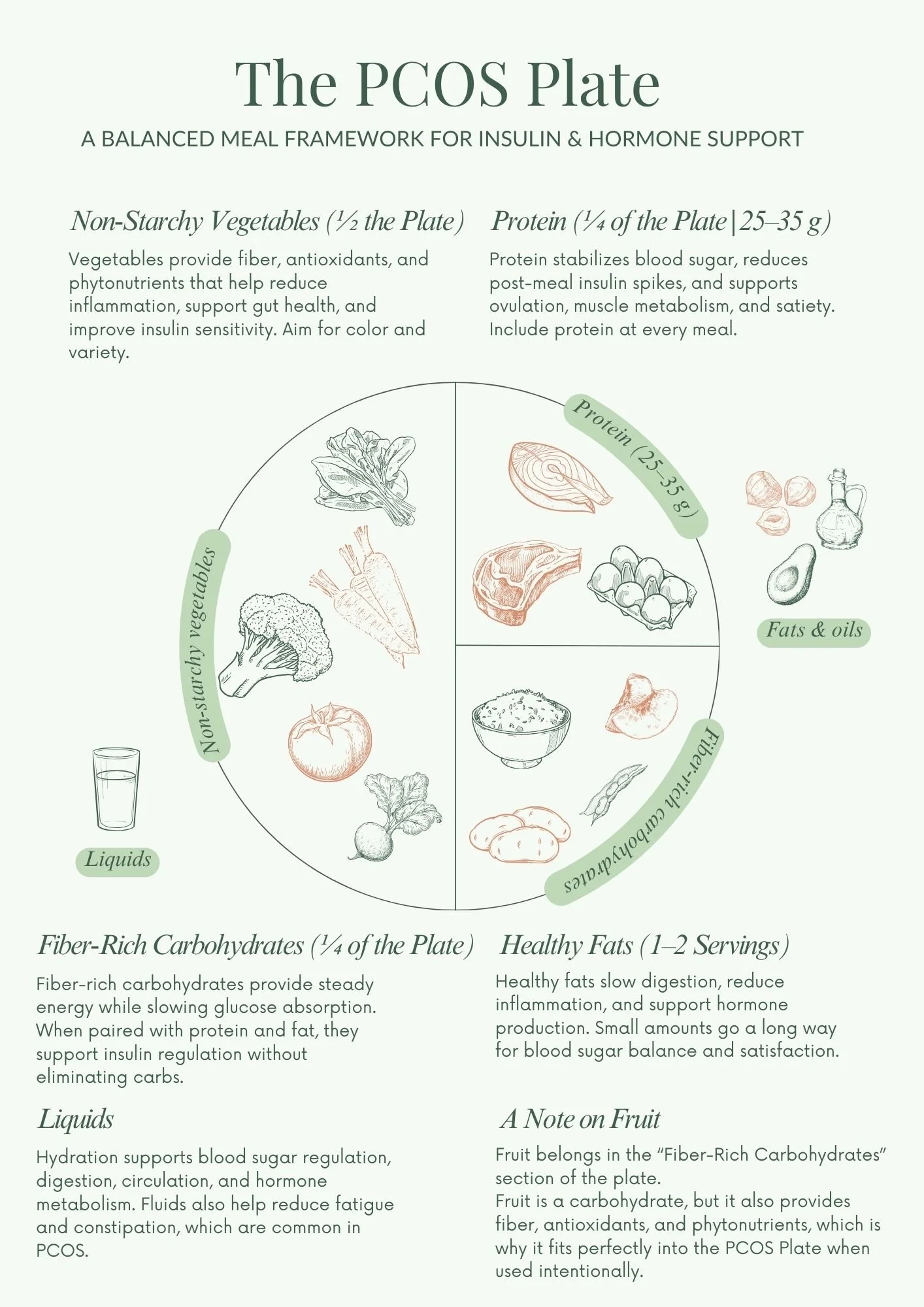
How to Build the PCOS Plate (The Structure)
The PCOS Plate is a visual, proportion-based framework designed to stabilize blood sugar, support ovulation, reduce androgen signaling, and lower metabolic stress — without requiring calorie tracking or restriction.
Rather than focusing on what to eliminate, the PCOS Plate focuses on what to include and how to pair foods.
At each main meal, aim for the following structure:
½ the Plate: Non-Starchy Vegetables
Non-starchy vegetables form the foundation of the PCOS Plate.
They provide:
Fiber to support insulin sensitivity and gut health
Antioxidants that reduce inflammation
Micronutrients that support hormone metabolism
Examples include:
Leafy greens (spinach, kale, arugula)
Broccoli, cauliflower, Brussels sprouts
Zucchini, peppers, tomatoes
Mushrooms, asparagus, green beans
Vegetable variety matters. Rotating vegetables supports gut microbial diversity, which plays a role in hormone and metabolic health.
¼ of the Plate: Protein (The Hormonal Anchor)
Protein is the hormonal anchor of the PCOS Plate.
Adequate protein:
Reduces post-meal insulin spikes
Improves satiety and appetite regulation
Supports ovulatory signaling
Preserves muscle mass and metabolic health
Aim for 25–35 grams of protein per meal.
Protein options include:
Eggs
Greek yogurt or cottage cheese
Chicken, turkey, fish
Tofu, tempeh, edamame
Lentils or beans (paired with additional protein as needed)
Protein earlier in the day is especially helpful for improving glucose control and reducing cravings later on.
¼ of the Plate: Fiber-Rich Carbohydrates (Including Fruit)
Carbohydrates are not removed on the PCOS Plate — they are paired intentionally.
Fiber-rich carbohydrates:
Slow glucose absorption
Improve insulin sensitivity
Support estrogen and androgen clearance
Feed beneficial gut bacteria
Examples include:
Quinoa, barley, farro
Sweet potatoes
Lentils, beans, chickpeas
Oats
Whole fruits such as berries, apples, and pears
Fruit belongs on the PCOS Plate as part of the carbohydrate portion, ideally paired with protein or fat to reduce blood sugar spikes.
Healthy Fats: Added Around the Plate
Healthy fats are not a separate plate section — they are added around the plate to support hormone production and blood sugar stability.
Healthy fats help:
Slow digestion
Improve nutrient absorption
Support anti-inflammatory pathways
Examples include:
Olive oil
Avocado
Nuts and seeds
Tahini
Fatty fish
Most meals benefit from 1–2 servings of healthy fat.
Liquids and Beverages
Beverages do not replace food, but they can support metabolic and hormonal health.
Supportive options include:
Water
Sparkling water
Unsweetened herbal teas (including spearmint)
Black coffee or tea if tolerated
Sugary beverages and juices can spike insulin and are best minimized.
What the PCOS Plate Does (Without You Thinking About It)
When meals follow this structure, they naturally:
Reduce insulin spikes
Lower inflammatory androgen signaling
Improve appetite regulation
Support gut health and fiber intake
Create conditions for ovulation and progesterone production
This structure is the foundation that allows more advanced strategies — like gut health support, prebiotics, probiotics, and SCFAs — to work effectively.
Key Takeaway
The PCOS Plate is not about perfection or rigid rules.
It’s a repeatable structure that supports hormones, metabolism, and digestion — one meal at a time.
Why Balanced Meals Matter for PCOS
PCOS, Insulin Resistance, and Your Metabolism
Approximately 70–80% of women with PCOS experience insulin resistance — even when they’re not overweight.
When insulin stays elevated:
The ovaries produce more androgens
Follicle development becomes disrupted
Ovulation becomes irregular or absent
The Full Hormone Loop (What’s Often Missed)
Here’s the complete picture:
High insulin → increased ovarian androgens → disrupted ovulation → low progesterone
(This insulin-androgen connection also influences cholesterol levels and long-term cardiometabolic risk in PCOS, which I explore in my PCOS and cholesterol guide.)
Low progesterone contributes to:
Strong PMS-like cravings
Emotional eating
Appetite instability
Carb cravings before or without a period
This is why cravings in PCOS are physiological, not willpower-based. (I break this down further in my PCOS cravings guide).
Balanced meals interrupt this loop at its root.
Food timing and nutrient pairing can reduce insulin spikes by 20–50%, which directly reduces androgen signaling over time.
Cravings Are Not a Willpower Problem
Cravings in PCOS are often driven by insulin resistance and low progesterone, not lack of discipline. Stabilizing blood sugar is a form of hormone care — not a failure of self-control.
Progesterone, Ovulation, and Appetite Regulation
In a typical cycle, ovulation triggers progesterone production during the luteal phase. Progesterone helps:
Stabilize blood sugar
Calm the nervous system
Regulate appetite and mood
Many women with PCOS do not ovulate consistently, meaning progesterone remains chronically low.
Balanced meals help stabilize blood sugar in the absence of consistent progesterone, which is why many women notice reduced cravings even before cycles fully regulate.
(Low progesterone also contributes to mood changes, fatigue, and sleep disruption in PCOS — topics I address further in my PCOS fatigue and nervous-system nutrition guides.)
Now that you understand how the PCOS Plate is structured, we can look more closely at one system this framework supports especially well: gut health.
PCOS, Gut Health, and Hormone Balance
Gut health plays a foundational — but often overlooked — role in PCOS. Beyond digestion, the gut influences insulin sensitivity, inflammation, hormone metabolism, and appetite regulation.
Your digestive system directly affects:
Insulin sensitivity
Inflammation levels
Estrogen and androgen metabolism
Appetite and satiety signaling
Many women with PCOS experience gut-related symptoms such as bloating, constipation, food sensitivities, or irregular digestion. These symptoms aren’t separate from PCOS — they’re connected.
Gut Symptoms Are Common in PCOS
Bloating, constipation, food sensitivities, and digestive discomfort are not personal failures — they’re common in PCOS and often reflect underlying insulin resistance, inflammation, hormonal dysregulation, and chronic metabolic stress.
How the Gut Influences Hormones in PCOS
A healthy gut helps:
Break down and excrete excess hormones
Regulate inflammation that can worsen insulin resistance
Support stable blood sugar through gut-derived hormones
Communicate fullness and hunger to the brain
When gut function is disrupted, it can contribute to:
Worsening insulin resistance
Increased inflammatory androgen activity
Slower estrogen clearance
Stronger cravings and digestive discomfort
This is one reason PCOS symptoms often feel systemic rather than isolated.
Gut health also intersects with ovulatory hormones. Progesterone plays a role in supporting gut barrier integrity, and when ovulation is inconsistent — as is common in PCOS — progesterone remains low. Over time, this may leave the gut lining more vulnerable to inflammation, further disrupting insulin and hormone signaling.
Prebiotics and Probiotics: How They Fit Into the PCOS Plate
Two key players in gut health are prebiotics and probiotics — and understanding the difference matters.
Prebiotics
Prebiotics are types of dietary fiber that feed the gut microbiome. They are not bacteria themselves — they are the fuel that helps beneficial bacteria grow, diversify, and function.
In PCOS, prebiotic fibers help:
Improve insulin sensitivity
Reduce low-grade inflammation
Support estrogen and androgen clearance
Improve stool regularity over time
A diverse gut microbiome supports more efficient hormone metabolism, including the breakdown and excretion of excess androgens. Lower microbial diversity has been associated with higher inflammation and impaired hormone clearance, which may worsen androgen-related symptoms in PCOS.
Common prebiotic-rich foods include:
Oats
Barley
Lentils and beans
Chickpeas
Garlic and onions
Leeks
Asparagus
Slightly underripe bananas
Apples
These foods naturally fit within the fiber-rich carbohydrate and vegetable portions of the PCOS Plate.
Probiotics
Probiotics are live microorganisms that help maintain a healthy balance of gut bacteria. They are found in certain fermented foods and supplements.
In PCOS, probiotics may help:
Reduce inflammation
Improve insulin sensitivity
Support gut barrier function
Improve bloating or digestive comfort for some women
Food-based probiotic sources include:
Yogurt with live cultures
Kefir
Sauerkraut
Kimchi
Miso
Tempeh
Probiotics work best when paired with adequate prebiotic fiber, which provides the fuel they need to survive and function.
Why the PCOS Plate Supports Gut Health
The PCOS Plate supports gut health by:
Prioritizing fiber-rich carbohydrates
Encouraging vegetable diversity
Supporting regular meal timing
Avoiding extreme restriction, which can stress the gut
Over time, this approach helps:
Feed beneficial gut bacteria
Improve stool regularity
Reduce inflammation
Support healthy hormone metabolism
For many women with PCOS, digestion and bloating improve simply by eating more consistently and building meals around fiber and protein.
Short-Chain Fatty Acids (SCFAs): The Gut–Weight–Hormone Link
When prebiotic fibers are fermented by beneficial gut bacteria, they produce compounds called short-chain fatty acids (SCFAs) — primarily acetate, propionate, and butyrate.
These compounds play a critical role in PCOS-related metabolism.
SCFAs help:
Improve insulin sensitivity
Reduce chronic inflammation
Support gut barrier integrity
Influence appetite regulation and satiety
Signal the body to use energy more efficiently
SCFAs and Weight Regulation in PCOS
In PCOS, insulin resistance and inflammation can make weight regulation more difficult — even when calorie intake is moderate.
SCFAs help regulate weight by:
Improving how cells respond to insulin
Supporting hormones involved in fullness and appetite control
Reducing inflammatory signals that interfere with metabolism
Supporting metabolic flexibility rather than fat storage
This is one reason fiber intake matters more than calorie cutting for many women with PCOS.
Low fiber intake → reduced SCFA production → impaired insulin signaling → harder weight regulation.
Gut Barrier Integrity, Cortisol, and Inflammation
The gut lining is highly sensitive to stress. Chronic stress and elevated cortisol can weaken gut barrier integrity, making the intestinal lining more permeable.
When this barrier is compromised, inflammatory signals increase. Pro-inflammatory cytokines, including interleukins such as IL-6 and IL-1β, may rise — worsening insulin resistance, increasing inflammatory androgen activity, and further disrupting ovulatory signaling.
This gut–stress–inflammation loop helps explain why PCOS symptoms often flare during periods of high stress, poor sleep, or chronic undereating.
Why Undereating Harms Gut Health in PCOS
Chronic undereating can negatively affect gut health by:
Reducing fiber intake and microbial fuel
Increasing cortisol and inflammatory signaling
Limiting the production of SCFAs
Weakening gut barrier integrity
This is why restrictive diets often backfire in PCOS — even when food choices appear “healthy.”
Weight Regulation in PCOS Is Not Just About Calories
Supporting gut bacteria through fiber-rich, balanced meals improves insulin sensitivity and metabolic signaling — creating conditions where weight regulation becomes more sustainable.
How the PCOS Plate Supports SCFA Production
The PCOS Plate naturally supports SCFA production by prioritizing:
Fiber-rich carbohydrates (beans, lentils, oats, barley)
Vegetable diversity
Whole fruits with fiber
Consistent meal timing, which supports gut bacterial rhythms
You do not need extreme fiber goals or supplements. Gradual, consistent fiber intake allows the gut to adapt and produce SCFAs more effectively over time.
Important Clarification
SCFAs are not something you supplement directly.
They are produced when:
You eat enough fiber
Your gut bacteria are supported
Meals are balanced and consistent
This is why gut health and weight regulation in PCOS are deeply connected — and why restrictive dieting often backfires.
How to Incorporate Prebiotics and Probiotics Into the PCOS Plate
Here’s how gut-supportive foods fit into the PCOS Plate framework:
½ the plate: Non-starchy vegetables
Include prebiotic vegetables such as onions, leeks, asparagus, and leafy greens when tolerated.¼ of the plate: Fiber-rich carbohydrates (including fruit)
Choose oats, barley, lentils, beans, or apples to provide prebiotic fiber that supports gut bacteria.¼ of the plate: Protein
Include probiotic-rich options when tolerated, such as yogurt, kefir, tempeh, or miso-marinated proteins.Healthy fats added around the plate
Support nutrient absorption and gut barrier health.
Small, consistent inclusion of prebiotic and probiotic foods is more effective than large, infrequent amounts.
A Gentle Note on Supplements
Food-based gut support should come first.
Probiotic supplements may be helpful for some women with PCOS, but they are not required — and they should be chosen based on symptoms, tolerance, and clinical guidance.
Many gut improvements occur simply by:
Eating regularly
Increasing fiber gradually
Reducing extreme restriction
Supporting blood sugar stability
You Don’t Need Extreme Gut Protocols
Most women with PCOS do not need elimination diets or aggressive “gut healing” plans. Consistent, balanced meals that support blood sugar and fiber intake are often the most effective first step.
The Bottom Line
Gut health in PCOS is not about aggressive “healing protocols.”
It’s about:
Feeding beneficial bacteria with fiber
Supporting digestion through balanced meals
Reducing metabolic and inflammatory stress
The PCOS Plate provides a practical, sustainable framework to support gut health without overwhelm.
TL;DR: Supporting gut health through fiber-rich, balanced meals improves insulin sensitivity, reduces inflammation, and supports hormone and weight regulation in PCOS.
Evidence-Based Nutrition Recommendations for PCOS
Nutrition therapy for PCOS focuses on improving insulin sensitivity, reducing androgen excess, and supporting sustainable metabolic health — not extreme restriction.
(Over-restriction can worsen fatigue, cravings, and hormone disruption in PCOS — especially in lean PCOS — which I discuss further in my PCOS fatigue and lean PCOS nutrition resources.)
1. Moderate Caloric Restriction (If Weight Loss Is a Goal)
A daily deficit of 350–700 kcal may improve:
Insulin function
Ovulation
Menstrual regularity
Androgen levels
Over-restriction increases cortisol and worsens metabolic stress.
2. Higher Protein Intake (~30% of Calories)
Protein improves satiety and glucose control.
Aim for ~30% of calories from protein
Most women benefit from 25–35 g per meal
3. Increased Fiber Intake (+10 g/day)
Fiber improves:
Insulin sensitivity
Gut hormone signaling
Estrogen and androgen clearance
Target 25–35+ g/day.
Gut Health Connection
A healthy gut microbiome supports estrogen clearance and reduces inflammation. Dysbiosis can worsen insulin resistance, bloating, and hormonal symptoms — which is why fiber quality matters.
(Gut health also plays a role in inflammation and estrogen metabolism in PCOS, which I explore further in my PCOS inflammation guide.)
4. Moderate-to-Lower Carbohydrate Ratios
Many women benefit from:
~40% carbs (moderate)
20–30% for more severe insulin resistance
Carbohydrate quality matters more than elimination.
(This distinction is especially important for women who experience strong cravings or fatigue when carbs are restricted too aggressively — a common issue I cover in my PCOS cravings guide.)
5. Time-Restricted Eating (Optional Tool)
An 8-hour eating window may help some women — but it is not required and should only be used if it feels sustainable and does not increase food anxiety.
Meal Timing Considerations for PCOS
Protein earlier in the day improves glucose control
Skipping meals can worsen androgen signaling
Late-night eating may disrupt insulin and sleep
Consistency matters more than perfection.
(Irregular meal timing can worsen fatigue and blood sugar crashes in PCOS — topics I explore further in my PCOS fatigue guide.)
Specific Foods With Evidence for PCOS Support
Olive oil, nuts, seeds, fatty fish → improve inflammation and insulin sensitivity
Apple cider vinegar (1–2 tbsp/day) → may improve fasting glucose
Flax oil or ground flaxseed (1–2 tbsp/day) → may lower androgens and support acne/hair health
Soy protein (≥8 g/day) → associated with lower androgens and improved insulin sensitivity
Spearmint tea (2 cups/day) → studied for reducing free testosterone
Important: Food sources support metabolic health but do not replace supplementation when clinically indicated. Supplements should always be individualized with a healthcare provider.
Food-based support is foundational, but some women also benefit from targeted supplements like inositol or berberine, which I discuss in dedicated supplement guides.
Food ≠ Supplements
Whole foods support hormone and metabolic health, but they do not replace supplementation when clinically indicated. Supplements such as inositol should always be individualized and discussed with a healthcare provider.
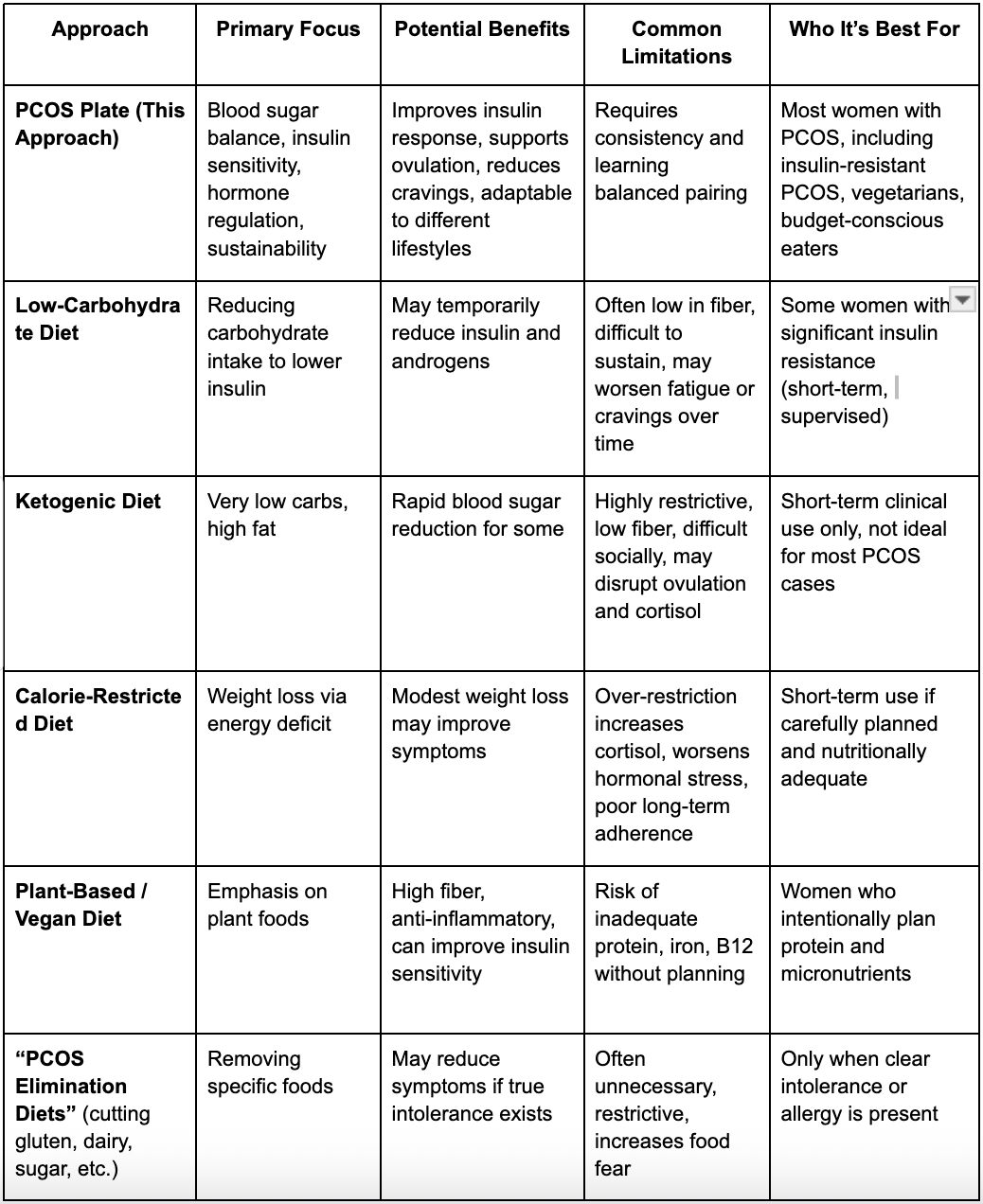
PCOS Plate vs Common PCOS Diet Approaches
There Is No Single “Best” PCOS Diet
The most effective nutrition approach for PCOS is one that improves insulin sensitivity and can be sustained long-term. Restrictive diets may offer short-term changes, but balanced, hormone-supportive eating creates lasting results.
Why the PCOS Plate Is Different
Unlike many PCOS diets, the PCOS Plate:
Does not eliminate entire food groups
Prioritizes insulin regulation over weight loss
Emphasizes fiber, protein, and fat pairing
Supports ovulation and progesterone production
Can be adapted for:
Lean PCOS
Vegetarian or plant-forward eating
Budget-friendly grocery lists
Long-term sustainability
Using the PCOS Plate in Real Life (Meals, Pairing, and Portions)
Now that you understand the structure of the PCOS Plate, here’s how to apply it in everyday meals — without tracking, perfection, or restriction.
1. The PCOS Plate Breakdown (A Review of What Goes Where)
The PCOS Plate is built around balanced proportions, not perfection.
Here’s how to visualize your plate:
½ the plate: Non-starchy vegetables
Leafy greens, cruciferous vegetables, and colorful vegetables provide fiber, antioxidants, and anti-inflammatory compounds that support insulin sensitivity and hormone metabolism.¼ of the plate: Protein (25–35 g)
Protein stabilizes blood sugar, reduces insulin spikes, and supports ovulation, muscle metabolism, and satiety. Include protein at every meal.¼ of the plate: Fiber-rich carbohydrates (including fruit)
Fiber-rich carbohydrates provide steady energy and support insulin regulation when paired with protein and fat. This includes whole grains, legumes, starchy vegetables, and whole fruit.Healthy fats: Added around the plate (1–2 servings)
Healthy fats slow digestion, support hormone production, and improve blood sugar stability. Think olive oil, avocado, nuts, and seeds.
This structure allows carbohydrates — including fruit — to remain part of meals without driving insulin spikes, because they are paired intentionally.
2. Start With Protein Minimums
Protein is the easiest place to start if everything else feels overwhelming.
Aim for 25–35 g per meal.
Protein-Focused Plate Examples
Scrambled eggs with sautéed spinach, feta, and olive oil
Greek yogurt with berries, chia seeds, and almond butter
3. Add High-Fiber Carbohydrates
Target 6–10 g fiber per meal.
High-Fiber Carb Examples
Quinoa with roasted vegetables and tahini
Lentil pasta with turkey meatballs and sautéed greens
4. Smart Carb Pairing
Always pair carbs with protein and/or fat.
Balanced PCOS Plate Pairings
Sweet potato + grilled chicken + avocado
Brown rice + salmon + broccoli
5. Add Anti-Inflammatory Fats
Include 1–2 servings per meal.
PCOS Plate Meal Examples (Breakfast, Lunch, Dinner & Snacks)
Breakfast Plates
High-protein smoothie with Greek yogurt, frozen berries, spinach, flax, and nut butter
Savory breakfast bowl with eggs, roasted vegetables, and sweet potato
Lunch Plates
Salmon quinoa bowl with kale, chickpeas, olive oil, and lemon
Lentil salad with arugula, cucumber, feta, and grilled chicken
Dinner Plates
Turkey meatballs with chickpea pasta, spinach, and olive oil
Tofu stir-fry with brown rice, mixed vegetables, and sesame oil
Snack / Mini-Meal Plates
Apple slices with pumpkin seeds and string cheese
Hummus with veggies and whole-grain crackers
Vegetarian PCOS Plate Meal Examples (Plant-Forward & Hormone-Supportive)
These vegetarian meals follow the same PCOS Plate principles:
✔ Adequate protein
✔ High fiber
✔ Balanced carbohydrates
✔ Anti-inflammatory fats
They are especially helpful for women with PCOS who prefer plant-based eating or want to reduce animal protein without compromising hormone balance.
Vegetarian Breakfast Plates
Savory tofu scramble with sautéed spinach, mushrooms, olive oil, and a side of roasted sweet potato
Greek yogurt or soy yogurt bowl with berries, chia seeds, ground flax, and almond butter
High-protein smoothie with soy milk, protein powder, frozen berries, spinach, and flaxseed
Vegetarian Lunch Plates
Quinoa lentil bowl with roasted vegetables, arugula, tahini, and olive oil
Chickpea and vegetable stir-fry over brown rice with sesame oil
Edamame and tofu salad with mixed greens, cucumber, avocado, and lemon-olive oil dressing
Vegetarian Dinner Plates
Tofu or tempeh stir-fry with mixed vegetables, quinoa, and sesame or olive oil
Chickpea pasta with sautéed spinach, mushrooms, olive oil, and nutritional yeast or feta
Lentil curry with vegetables served over basmati or brown rice
Vegetarian Snack / Mini-Meal Plates
Apple slices with pumpkin seeds and a small serving of cheese or soy yogurt
Hummus with vegetables and whole-grain crackers
Roasted edamame with olive oil and sea salt
Why Vegetarian PCOS Plates Work
Plant-forward PCOS meals can be highly effective when they:
Include intentional protein pairing (soy, tofu, tempeh, lentils)
Emphasize fiber and unsaturated fats
Avoid overly refined carbohydrates
Support insulin sensitivity and androgen regulation
Soy foods providing ≥8 g of soy protein per day have been associated with improvements in insulin sensitivity and androgen levels in women with PCOS.
Important Note
Vegetarian and plant-based PCOS plates still require adequate total protein, iron, B12, zinc, and omega-3s. Individual needs vary, and supplementation may be appropriate for some.
Budget-Friendly PCOS Plate Options
Supporting PCOS does not require expensive superfoods, specialty products, or perfect eating.
Some of the most effective PCOS-supportive foods are also the most affordable.
The key is focusing on protein adequacy, fiber, and smart pairing — not price.
PCOS Nutrition Does Not Have to Be Expensive
You do not need specialty products or superfoods to support PCOS. Simple staples like eggs, oats, beans, frozen vegetables, and olive oil can be just as effective when meals are balanced properly.
Budget-Friendly Protein Staples
These options are cost-effective, versatile, and PCOS-friendly:
Eggs
Canned tuna or salmon
Frozen chicken thighs or drumsticks
Dried or canned beans and lentils
Tofu and tempeh
Plain Greek yogurt or soy yogurt
Peanut butter
Tip: Buying frozen proteins and store-brand staples often cuts costs significantly without sacrificing nutrition.
Budget-Friendly High-Fiber Carbohydrates
Fiber-rich carbs are essential for insulin resistance — and many are inexpensive:
Oats
Brown rice
White rice (paired with protein and fiber)
Potatoes and sweet potatoes
Frozen berries
Cabbage, carrots, onions
Lentils and split peas
Frozen vegetables are just as nutritious as fresh and often more affordable.
Budget-Friendly PCOS Plate Examples
Breakfast
Oatmeal cooked with milk or soy milk, topped with peanut butter and frozen berries
Eggs with sautéed cabbage and potatoes cooked in olive oil
Lunch
Lentil soup with vegetables and a side of whole-grain bread
Tuna salad with beans, olive oil, and vinegar over mixed greens
Dinner
Chicken thighs with rice, frozen vegetables, and olive oil
Tofu stir-fry with cabbage, carrots, and brown rice
Snack / Mini-Meal
Apple with peanut butter
Yogurt with oats and ground flax
Budget-Friendly Hormone-Supportive Add-Ons
Apple cider vinegar (low cost, long-lasting)
Ground flaxseed (very affordable source of fiber + lignans)
Spearmint tea bags
Olive oil used strategically (small amounts go far)
Budget PCOS Takeaway
You do not need perfection or expensive foods.
Consistent, balanced meals built from simple staples can dramatically improve insulin sensitivity and hormone regulation.
Lean PCOS Plate Considerations (Important Modifications)
Lean PCOS is often misunderstood.
Even without weight gain, many women with lean PCOS still experience insulin resistance, androgen excess, and ovulatory disruption — but the nutrition approach needs specific adjustments.
If You Have Lean PCOS
Lean PCOS often requires more nourishment, not more restriction. Aggressive calorie cutting or prolonged fasting may worsen ovulatory disruption and hormonal stress. Regular, balanced meals are essential.
How Lean PCOS Is Different
Women with lean PCOS often experience:
Irregular ovulation without obvious insulin resistance markers
High androgens despite normal BMI
Higher cortisol sensitivity
Greater risk of under-eating
Because of this, weight loss–focused advice is often inappropriate and potentially harmful.
Key Lean PCOS Nutrition Principles
1. Avoid Calorie Restriction
Lean PCOS generally benefits from:
Adequate energy intake
Regular meals
Avoiding prolonged fasting
Under-eating can worsen ovulation disruption and increase stress hormones.
2. Maintain Protein Minimums (Do Not Skimp)
Protein remains critical:
25–35 g per meal
Supports ovulation and blood sugar stability
Prevents muscle loss and fatigue
3. Carbohydrates Are Still Important
Lean PCOS does not require very low-carb eating.
Most women do best with:
Moderate carbohydrate intake
High fiber
Strategic pairing rather than restriction
Overly low-carb diets may worsen cortisol and cycle irregularity in lean PCOS.
4. Emphasize Meal Timing Consistency
Regular meals help:
Stabilize cortisol
Support ovulation
Reduce nervous system stress
Skipping meals or aggressive time-restricted eating is often counterproductive for lean PCOS.
Lean PCOS Plate Meal Examples
Breakfast
Greek yogurt or soy yogurt with oats, berries, and nuts
Eggs with toast, avocado, and sautéed vegetables
Lunch
Quinoa bowl with lentils, vegetables, olive oil, and feta
Rice with tofu, vegetables, and sesame oil
Dinner
Salmon or tofu with potatoes, greens, and olive oil
Lentil pasta with olive oil, vegetables, and protein
Snack
Fruit with yogurt or nut butter
Crackers with hummus and seeds
Lean PCOS Takeaway
Lean PCOS still benefits from blood sugar balance and insulin support, but restriction is not the solution.
Consistency, adequacy, and nourishment matter more than cutting calories.
(Lean PCOS often comes with overlooked metabolic and hormonal challenges, including fatigue and cycle irregularity, which I address further in my lean PCOS nutrition guide.)
Movement & Sleep: Underrated Hormone Levers
Movement
10–15 minute walks after meals
Strength training 2–3x/week
Low-impact activity
Sleep
Aim for 7–9 hours nightly. Poor sleep increases insulin resistance within 24 hours.
Common PCOS Plate Mistakes
Under-eating protein
Skipping meals
Going low-carb but low-fiber
Over-restricting calories
Treating spearmint tea as a cure-all
Putting It All Together
✔ Protein: 25–35 g
✔ Fiber: 25–35+ g/day
✔ Healthy fats: 1–2 servings/meal
✔ Veggies: Half the plate
✔ Movement + sleep
Consistency — not perfection — is the goal.
What the PCOS Plate Will Not Do
It will not “fix” PCOS overnight
It will not replace medical care when needed
It will not require perfection or restriction
What it does provide is a sustainable foundation for hormone and metabolic health.
FAQ
Is the PCOS Plate low-carb?
No — it is carb-conscious, not carb-eliminating.
Can this help PCOS fatigue or cholesterol?
Yes. Stable blood sugar, fiber, and unsaturated fats support energy and lipid metabolism (explored further in my PCOS fatigue and cholesterol guides).
How long before I see results?
Many women notice energy and appetite improvements within 1–2 weeks.
Final Thoughts: You Don’t Need to Diet Your Way Out of PCOS
Small, sustainable nutrition shifts create meaningful hormonal change.
The PCOS Plate gives your body the building blocks to regulate insulin, calm inflammation, and support ovulation — without restriction or burnout.
Ready to build hormone-balanced meals with confidence?
Download my free guide: “PCOS Plate Blueprint: 10 Balanced Meal Templates You Can Use Today.”
Inside, you’ll get simple meal formulas, snack pairings, and my go-to PCOS-friendly grocery list.
Or, book a 1:1 session here today for personalized PCOS nutrition support.
