
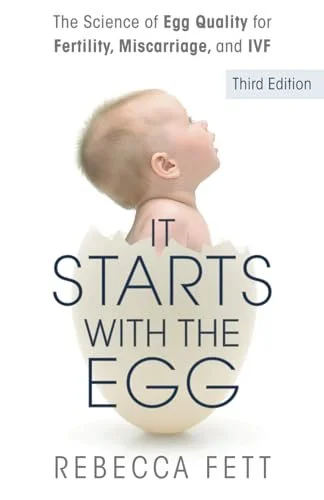
It Starts With The Egg by Rebecca Fett — The Ultimate Evidence-Based Guide to Fertility and Egg Quality (Book Review)
What It Starts With the Egg Is About
At its core, the book answers one question:
Can you improve your egg quality — and therefore fertility — through lifestyle changes?
Rebecca Fett’s answer, backed by decades of research, is yes.
Egg quality influences:
Conception success
Embryo development
Chromosomal normality
IVF outcomes
Miscarriage risk
Most people assume egg quality is fixed. Fett’s research shows the opposite:
Eggs undergo crucial maturation in the 90 days before ovulation — and this window is highly responsive to diet, toxins, stress, and supplements.
This creates a hopeful, actionable roadmap for fertility that goes beyond “just relax” or “just try IVF.”
1. The Science: What Affects Egg Quality?
Fett explains egg quality through the lens of biology:
Eggs are vulnerable to:
Oxidative stress
Mitochondrial dysfunction
Environmental toxins
Chronic inflammation
Insulin resistance
And egg quality can improve through:
Antioxidants
Nutrient-dense diets
Blood sugar balance
Targeted supplements
Environmental detoxification
What makes this book so powerful is its clarity:
Egg quality isn’t a mystery — it’s chemistry, biology, and habit.
2. Environmental Toxins: The Biggest Fertility Saboteurs
This section is often the book’s biggest eye-opener.
Fett identifies three chemical categories with the strongest evidence of harming egg quality:
BPA + BPS (Plastics)
Found in food containers, water bottles, can linings, receipts, and even “BPA-free” plastics.
Impacts:
Estrogen disruption
Poorer embryo quality
Increased miscarriage risk
Fix:
→ Switch to glass or stainless steel
→ Never microwave plastic
→ Limit canned foods
Phthalates
Found in fragrances, perfumes, lotions, shampoos, laundry detergents, and household cleaners.
Impacts:
Reduced ovarian reserve
Disrupted hormone signaling
Fix:
→ Choose fragrance-free or essential-oil–based products
→ Avoid scented candles, air fresheners, perfumes
Nonstick coatings, flame retardants, pesticides
These exposures can accumulate in the body and directly impair egg development.
Fix:
→ Replace nonstick pans with cast iron or stainless steel
→ Wash produce thoroughly
→ Use safer home-cleaning swaps
This section alone can improve a woman’s fertility environment dramatically.
3. Nutrition for Egg Quality: What to Eat
The book reinforces a nutrition philosophy perfectly aligned with your brand: whole foods, hormone support, and metabolic balance.
Core patterns that support egg quality:
Mediterranean-style meals
High-antioxidant fruits + vegetables
Omega-3 rich foods (salmon, sardines, chia, walnuts)
Protein + fiber at every meal for blood sugar stability
Lower refined carbohydrate intake
Women with PCOS receive specific guidance on:
Lower glycemic load
Myo-inositol supplementation
Reducing sugar and ultra-processed carbs
Fett doesn’t demonize food — she emphasizes blood sugar balance and nutrient density.
4. The Fertility Supplements With the Best Evidence
This is the section many readers buy the book for — but it’s also the most frequently misinterpreted online.
Below is the book’s evidence-based supplement framework.
CoQ10 (Ubiquinol): The Book’s #1 Recommendation
Why it matters:
Supports mitochondrial energy production
Improves egg performance during cell division
Enhances embryo development and IVF outcomes
Typical dosage in studies: 200–600 mg/day ubiquinol.
Myo-Inositol
Especially helpful for:
PCOS
Insulin resistance
Irregular ovulation
Improves ovulatory cycles and reduces IVF medication requirements.
Vitamin D
Essential for:
Hormone regulation
Endometrial receptivity
Immune modulation
Deficiency is linked to poorer IVF outcomes.
NAC (N-acetyl cysteine) & Alpha-Lipoic Acid
Powerful antioxidants that may:
Reduce oxidative stress
Improve insulin sensitivity
Support detox pathways
Omega-3 Fatty Acids
Benefits:
Anti-inflammatory
Improve egg membrane integrity
Support fetal brain development
Melatonin
Acts as a mitochondrial antioxidant in the ovary (not just a sleep hormone).
Note: Best used under practitioner guidance.
DHEA
Not for everyone.
Used mainly for:
Diminished ovarian reserve
Poor IVF responders
Requires lab monitoring.
5. Special Fertility Circumstances the Book Covers
Rebecca Fett provides targeted guidance for unique situations.
IVF or Egg Freezing
The book outlines a 90-day prep protocol:
High-dose CoQ10
Aggressive toxin reduction
Antioxidant-rich eating
Supplements tailored to age and ovarian reserve
PCOS
Strong focus on:
Insulin resistance
Myo-inositol
Carb quality
Endocrine disruptor exposure
Recurrent Pregnancy Loss
Many miscarriages are linked to chromosomal abnormalities.
Improving egg quality reduces this risk significantly.
Women Over 35
Fett emphasizes mitochondrial support:
Ubiquinol
Omega-3s
Antioxidant intake
Toxin avoidance
The message is hopeful: fertility declines with age, but egg quality is still modifiable.
6. The 90-Day Egg Quality Plan
This is where the book becomes a blueprint rather than just a resource.
Level 1 — Easy Wins
Switch to glass food storage
Replace personal care products
Start a high-quality prenatal
Reduce plastic exposure
Level 2 — Intermediate Plan
Add supplements (CoQ10, omega-3, inositol, NAC)
Shift toward Mediterranean eating
Reduce refined sugar and processed foods
Level 3 — Advanced 90-Day Protocol
Recommended for:
IVF
Women over 35
Poor responders
Recurrent miscarriage
Includes:
300–600 mg ubiquinol
Full toxin detox
Comprehensive supplement list
Intensive antioxidant strategy
Strict fragrance + plastic avoidance
This phased approach is approachable and empowering.
BOOK REVIEW: Strengths, Limitations & Who It’s For
Strengths
Incredibly well-researched
Actionable and realistic strategies
Hopeful, empowering tone
Organized into plans anyone can follow
Strong alignment with integrative nutrition
Who Will Benefit Most
Women with PCOS
Anyone preparing for IVF or egg freezing
Women 35+
Those with unexplained infertility
Anyone facing recurrent pregnancy loss
Women wanting to prepare their body for pregnancy
Limitations
Some supplements require medical supervision
The toxin chapter may feel overwhelming for beginners
Not a comprehensive fertility diet book
Some studies are still emerging (but well-referenced)
It Starts With the Egg in 12 Bullet Points
1. Egg quality can improve — dramatically — in 90 days.
2. Plastics (BPA/BPS) and phthalates are major fertility disruptors.
3. Use glass, stainless steel, and fragrance-free products daily.
4. Mediterranean-style eating supports egg and hormone health.
5. Blood sugar balance matters — especially for PCOS.
6. CoQ10 (ubiquinol) is the top supplement for egg quality.
7. Inositol helps with PCOS and insulin resistance.
8. Vitamin D is essential for fertility and IVF outcomes.
9. NAC, ALA, and omega-3s reduce oxidative stress.
10. Melatonin may improve egg maturity (use with guidance).
11. Women over 35 benefit from mitochondrial support.
12. Small daily changes → measurable improvements in embryo quality.
Work With Me 1:1
If you loved the science in It Starts With the Egg but want help actually implementing it in a realistic, sustainable way, this is what I do.
As a women’s health dietitian specializing in hormones, metabolic health, and fertility, I help women build personalized, evidence-based plans that support:
✨ Egg quality
✨ Cycle regulation
✨ PCOS management
✨ Blood sugar stability
✨ Detox pathways
✨ Mitochondrial health
✨ Preconception nutrition
If you want a customized roadmap based on your labs, symptoms, and lifestyle, click here to work with me 1:1
Your body can change — and so can your fertility.
Let’s build your plan together. 🌿
