
A Deep Dive Into Period Power by Maisie Hill — Book Review, Full Summary, Cycle Strategy Guide & Dietitian-Crafted Action Plan
Most women grow up learning almost nothing about how their menstrual cycle actually works — let alone how it influences their metabolism, mood, appetite, productivity, resilience, creativity, and overall well-being.
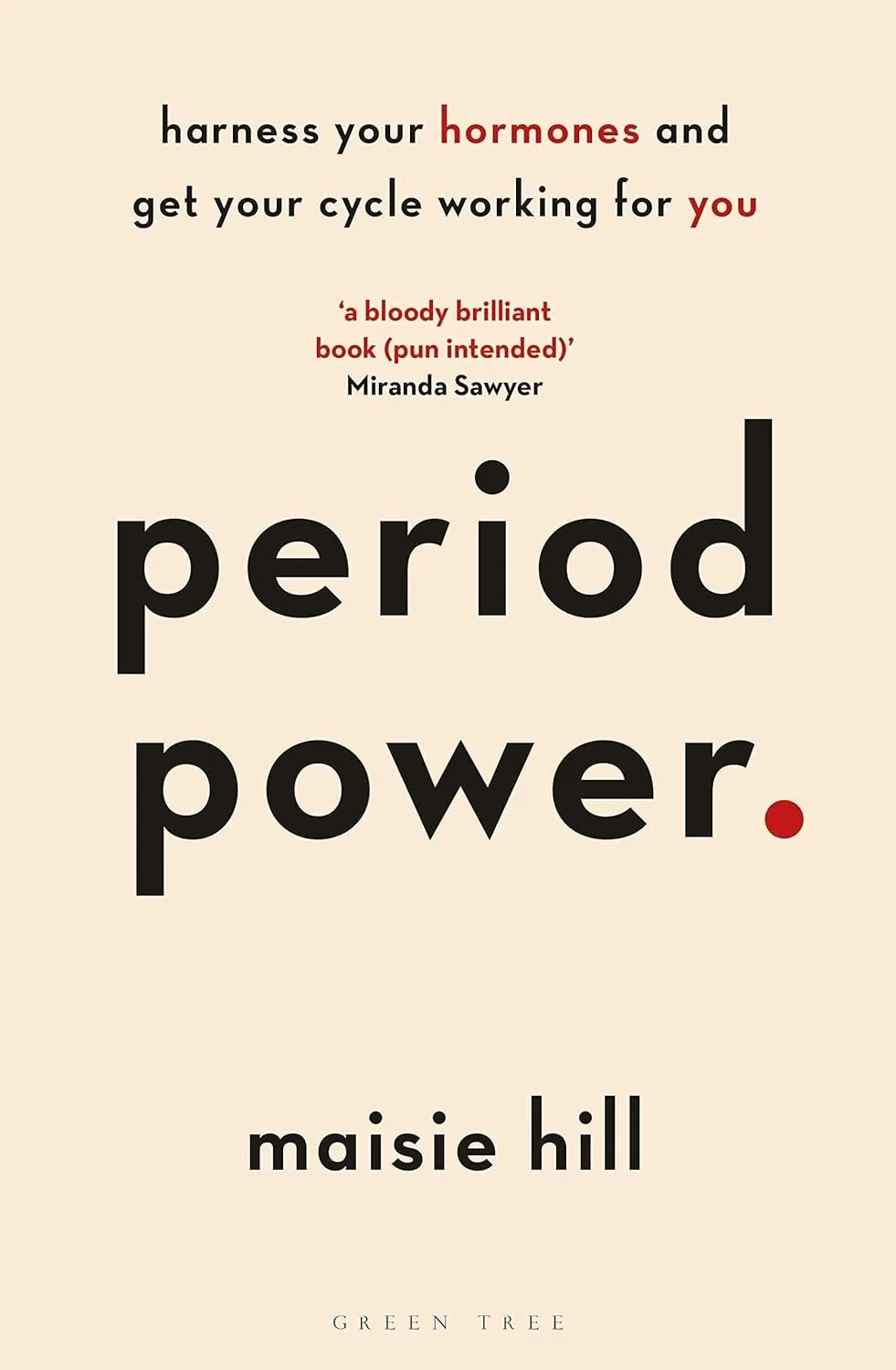
Maisie Hill’s Period Power: Harness Your Hormones and Get Your Cycle Working for You is a bold and refreshing answer to this gap. It shifts the menstrual cycle from something women must endure to something they can work with — a monthly roadmap that can enhance performance, energy, emotional balance, and intuition.
This comprehensive guide brings together:
✔ A detailed book review
✔ A full, evidence-informed summary
✔ Unique concepts and frameworks not explicitly named in the book
✔ A shortcut guide
✔ A cycle-specific nutrition & lifestyle plan based on Hill’s method
✔ Strengths and limitations from a dietitian’s perspective
✔ Integrative, science-backed, implementable recommendations
Let’s dive in.
What Period Power Offers — A Clear, Accessible Map of Your Hormone Landscape
Hill delivers a comprehensive, practical guide to understanding your menstrual cycle and the hormonal rhythm behind it. She explains how hormones influence everything from:
Mood
Sleep
Libido
Energy
Creativity
Stress tolerance
Productivity
Appetite and cravings
Digestion
Motivation
Many readers describe the book as “the missing education” they never received — not in health class, not from doctors, and not from cultural conditioning.
Her biggest contribution?
Reframing hormonal shifts from a burden into a source of personal power.
Instead of fighting your biology, Hill teaches you how to leverage it.
She introduces the concept of The Cycle Strategy:
A method of tracking your hormonal rhythms and aligning your lifestyle — work, relationships, exercise, nutrition, creativity, boundaries, and rest — with your body’s built-in ebb and flow.
This is not about perfection.
It’s about understanding your inner rhythm and harnessing predictable patterns to move through life with more ease and self-compassion.
The Four Seasons of Your Cycle — What’s Happening and How to Use It
Hill divides the menstrual cycle into four phases using seasonal metaphors. Each season comes with predictable hormonal influences, emotional tendencies, and physical cues.
Below is a rich, expanded interpretation that blends Hill’s teachings with integrative nutrition and behavioral science.
Inner Winter — Menstruation (Days 1–5)
Hormonal landscape:
Estrogen and progesterone are at their lowest.
Your body is shedding the uterine lining, energy is naturally lower, and your nervous system is more inwardly focused.
Common experiences:
Need for rest
Introspection
Lower mood or irritability
Cramping or fatigue
Decreased social drive
What to do:
✔ Rest, reflect, slow down
✔ Reduce social obligations
✔ Prioritize gentle movement
✔ Journal and clarify goals
✔ Honor signals of withdrawal
This phase is your monthly reset — a recalibration point that sets the tone for the rest of the cycle.
Inner Spring — Follicular Phase (Days 6–12)
Hormonal landscape:
Estrogen rises. Brain function improves. Energy lifts. Mood lightens.
Common experiences:
Increased motivation
Curiosity and optimism
Higher desire to learn
Better tolerance for new habits
What to do:
✔ Start new projects
✔ Begin habit changes
✔ Try new workouts or routines
✔ Take on mental challenges
✔ Plan the month ahead
This phase is ideal for building momentum.
Inner Summer — Ovulation (Days ~13–17)
Hormonal landscape:
Peak estrogen + a testosterone bump = peak energy, communication skills, libido, and creativity.
Common experiences:
Magnetic confidence
Emotional clarity
Desire to connect
Strong verbal skills
High productivity
What to do:
✔ Schedule high-visibility work
✔ Have important conversations
✔ Record content, teach, present
✔ Pursue social activities
✔ Channel peak strength into training
This is your monthly “power window.”
Inner Autumn — Luteal Phase (Days 18–28)
Hormonal landscape:
Progesterone rises (calming, slow-down energy) then drops (PMS territory).
Common experiences:
Sensitivity
Lower frustration tolerance
Need for boundaries
Attention to detail
Nesting instincts
What to do:
✔ Edit, refine, complete
✔ Establish structure and deadlines
✔ Support blood sugar balance
✔ Avoid over-scheduling
✔ Strengthen emotional boundaries
Your luteal phase is your month’s “truth teller” — it reveals unmet needs and emotional patterns.
What Else the Book Covers (and Why It Matters)
Period Power goes deeper than cycle syncing. Hill also includes:
✔ A plain-English explanation of anatomy
Filling in the education gaps most women never received.
✔ How to track your cycle meaningfully
Not just counting days — tracking states:
Energy
Mood
Sleep
Libido
Cravings
Bowel patterns
Stress response
Productivity
Cervical mucus
PMS trends
✔ What hormonal imbalance looks like
Hill explains potential causes of:
Irregular cycles
PMS / PMDD
Fertility challenges
Heavy or painful periods
Short luteal phases
Long cycles
Stress-related cycle disruptions
✔ Self-care strategies customized to each phase
Including nutrition, movement, rest, boundary setting, and emotional processing.
Strengths & Limitations Of Period Power — With A Dietitian’s Lens
Key Strengths
Accessible, Real-Life Language:
Hill explains complex hormonal physiology in clear, conversational terms that clients actually understand and remember.Reframes Hormones As A Source Of Power:
Instead of “What’s wrong with me?” women learn to say, “My cycle is predictable — I understand what’s happening and why.”Builds Body Literacy (Clinically Useful):
The emphasis on tracking energy, mood, cravings, sleep, and symptoms lays a strong foundation for nutrition interventions, especially for PMS, PMDD, PCOS, and stress-related cycle changes.Normalizes Hunger, Cravings & Emotional Shifts:
The four-season model validates that appetite, cravings, and mood do shift across the cycle, reducing shame and helping women make more compassionate nutrition and lifestyle choices.Encourages Non-Pharmaceutical Exploration:
For those who want more than “just go on the pill,” the book offers lifestyle and self-care strategies that can complement medical treatment.Integrates Stress, Nervous System & Hormones:
Hill clearly links stress, cortisol, sleep, and cycle changes — a core concept for dietitians working on blood sugar, adrenal health, and emotional eating.
Key Limitations
Holistic, Not A Clinical Protocol:
Some recommendations lean more holistic or experiential than strongly evidence-based. They’re often low-risk, but still require clinical judgment when applied in practice.Not All Cycles Fit The “Ideal” Pattern:
The four-season framework is helpful but simplified. It doesn’t fully capture the complexity of PCOS, hypothalamic amenorrhea, perimenopause, or very irregular cycles — where patterns may be blunted, delayed, or absent.Cycle-Syncing Isn’t Universally Practical:
Women on hormonal birth control, doing shift work, caregiving, or managing chronic illness may find it unrealistic to schedule life, work, or training neatly around their cycle.Nutrition Guidance Is General, Not Condition-Specific:
The book doesn’t provide targeted protocols for PCOS, thyroid disorders, insulin resistance, HA, or endometriosis. Dietitians will need to layer their own evidence-based frameworks on top of Hill’s concepts.Potential For Over-Identification With The Model:
Some readers may feel like they’re “failing” if their experience doesn’t match the textbook seasons. It’s important to emphasize individuality and flexibility, especially in clinical settings.
The Period Power Shortcut Guide
If you want the whole book in one glance:
WINTER: Rest
SPRING: Start
SUMMER: Shine
AUTUMN: Complete
TRACK: Energy + mood + symptoms → patterns become power
Dietitian-Crafted Action Plan — How to Implement Period Power in Real Life
Here is your expanded, integrative, evidence-informed cycle strategy.
Menstruation — Restore the System
Nutrition
✔ Iron + vitamin C pairings
✔ Warm, grounding meals
✔ Omega-3s
✔ Limit alcohol + salty foods
Movement
✔ Gentle yoga
✔ Walking
✔ Stretching
Lifestyle
✔ Strategic rest days
✔ Journaling for clarity
✔ Low-demand schedule
Unique Concept: Energy Banking
Your winter sets up your spring. Under-resting here triggers luteal burnout later.
Follicular — Build Momentum
Nutrition
✔ Lean proteins
✔ Leafy greens
✔ Fermented foods
✔ B-vitamin rich meals
Movement
✔ Try new workouts
✔ Increase strength training
✔ Improve NEAT (natural movement)
Lifestyle
✔ Begin new habits
✔ Set goals
✔ Plan the month
Unique Concept: Neuroplastic Window
Rising estrogen boosts learning → ideal for skill acquisition.
Ovulation — Maximize Peak Energy
Nutrition
✔ Anti-inflammatory foods
✔ Cruciferous veggies
✔ Hydration
✔ Liver-supportive foods
Movement
✔ HIIT
✔ Heavy lifts
✔ Group classes
Lifestyle
✔ Presentations
✔ Networking
✔ Hard conversations
✔ Create content
Unique Concept: Communication Superpower
Verbal fluency peaks here — use it strategically.
Luteal — Protect Your Energy
Nutrition
✔ Magnesium-rich foods
✔ Complex carbs
✔ Smaller, consistent meals
✔ Reduce caffeine + sugar
Movement
✔ Moderate strength
✔ Pilates / cycling
✔ Gentle endurance
Lifestyle
✔ Reduce stimulation
✔ Organize + complete
✔ Set boundaries
✔ Prioritize sleep
Unique Concept: Progesterone Sensitivity Window
Blood sugar is more sensitive → balanced meals = symptom reduction.
Build Your Personal Cycle Strategy (in 3 Steps)
Step 1: Track patterns for 1–3 cycles
Patterns matter more than dates.
Step 2: Align your schedule
Plan around your seasons — even small shifts help.
Step 3: Support hormones with lifestyle
Nutrition, sleep, stress, and movement are non-negotiable levers.
Final Thoughts: Why Period Power Matters Today
This book isn’t just about understanding your period — it’s about reclaiming agency over your body, energy, and emotions. As a dietitian integrating functional nutrition and hormone science, Period Power complements your philosophy beautifully:
Honor the body
Work with your biology
Nourish instead of restrict
Track patterns to create change
Women don’t need to fight their hormones.
They need to understand the rhythm—and live in partnership with it.
Want to Apply Cycle Syncing With Professional Support?
If you’re ready to:
Balance your hormones
Improve metabolic resilience
Reduce PMS and cyclical symptoms
Eat in alignment with your hormone rhythm
Feel energized, grounded, and connected to your body
I’d love to support you.
✨ Book a 1:1 hormone nutrition session here today
Your cycle is not a problem — it’s your power.
Let’s help you unlock it.
